
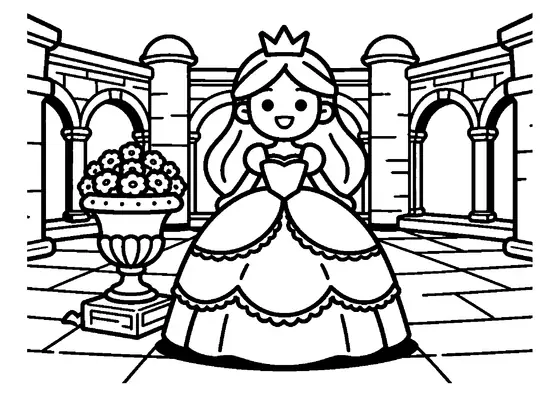
Princess in a Puff-Sleeve Gown in the Drawing Room
An elegant scene depicts a courtly princess wearing a gown with puffed sleeves inside a palace drawing room surrounded by mirrors.

A4 format (landscape), black outlines on a white background · for home and classroom use
All coloring pages: Princess Coloring Pages
Similar coloring pages: Princess Coloring Pages




What else can you print? Free, no account needed
Custom Name Coloring Pages
Enter your child's name to generate a custom coloring page featuring large outline letters to color and decorate.
Open generator →Connect the Dots Generator
Eight connect-the-dots pictures across three difficulty levels. Features faint outline guides for younger children and dots only for older kids.
Open generator →Printables
Worksheets, tracing lines, mazes and dot-to-dots in A4.
Browse printables →
Historical Palaces and Reflection Rooms
Drawing rooms in historic royal residences served as formal spaces where aristocracy gathered for private receptions, conversation, and musical entertainment. Wall mirrors were considered magnificent luxury items during the seventeenth and eighteenth centuries because large glass sheets were extremely difficult to manufacture. Placing multiple mirrors across a hall maximized ambient candlelight, creating a brilliant atmosphere for royal gatherings.
The Craft of Glass Mirror Making
Before modern industrial manufacturing, mirror production relied on hand-blown glass coated with liquid metal compounds like mercury and tin. Venetian glassmakers on the island of Murano held a strict monopoly on fine mirror production for generations to preserve their secret methods. The famous Hall of Mirrors at Versailles utilized hundreds of handcrafted glass panels to display royal prestige and power.
Natural Colors of a Palace Interior
- Princess gown: Silk fabrics in historic courts often featured shades of sapphire blue, emerald green, crimson, or pastel rose.
- Puff sleeves: Accent trims and decorative sleeve puffs were frequently made of white lace, silver embroidery, or cream satin.
- Mirror frames: Carved wooden borders surrounding wall mirrors were typically covered in gold leaf, bronze plating, or polished dark walnut.
- Drawing room walls: Elegant palace reception rooms commonly featured soft pastel wallpaper, marble paneling, or gilded plaster ornamentations.