
Embroidered Gown in a Historic Weaving Room
An antique embroidered court gown rests on a display stand inside a historic weaving room equipped with a spinning wheel and loom.

A4 format (landscape), black outlines on a white background · for home and classroom use
All coloring pages: Princess Coloring Pages
Similar coloring pages: Princess Coloring Pages
Princess in a Tulle Gown by the Palace Dovecote
Princess Wearing a Crown in the Palace Bakery
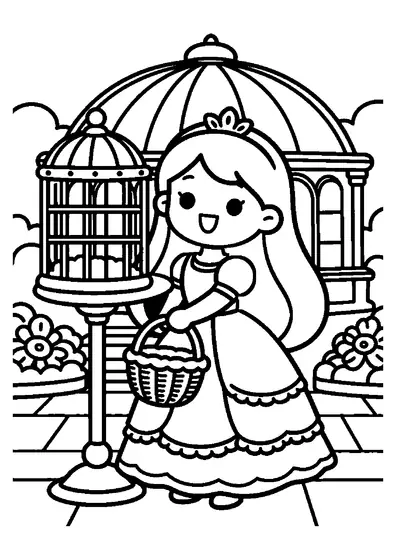
Young Princess with a Tiara by the Palace Aviary
Princess in a Taffeta Gown at the Palace Tea Pavilion
Princess in an Embroidered Corset Gown by the Vineyard
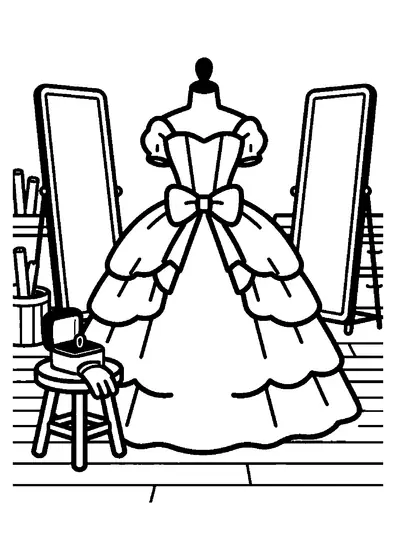
Royal Gown with a Bow on a Dress Form in a Fashion Studio




What else can you print? Free, no account needed
Custom Name Coloring Pages
Enter your child's name to generate a custom coloring page featuring large outline letters to color and decorate.
Open generator →Connect the Dots Generator
Eight connect-the-dots pictures across three difficulty levels. Features faint outline guides for younger children and dots only for older kids.
Open generator →Printables
Worksheets, tracing lines, mazes and dot-to-dots in A4.
Browse printables →
Historic Textile Craftsmanship in the Weaving Room
This page shows an elaborate embroidered court gown displayed on a dress stand within a historical weaving workshop. Positioned alongside traditional textile tools like a wooden spinning wheel and a handloom, the scene highlights the craftsmanship of historical garment making.
Traditional Textile Equipment and Court Fashion
Before modern industrial machinery, court dresses were created entirely by hand through labor-intensive processes. Spinning wheels drew natural plant or animal fibers into tight yarn, while wooden looms wove those threads into sturdy cloth. Skilled embroiderers then spent months stitching intricate metallic threads, pearls, and silk motifs onto the finished garments.
Real-World Colors of the Scene
- Embroidered court gown: deep burgundy or royal blue velvet with gold and silver thread stitching
- Dress display stand: dark polished mahogany or blackened iron framework
- Spinning wheel frame: warm honey-oak or walnut natural wood finish
- Weaving loom frame: sturdy natural pine or aged oak timber
- Workshop walls: pale plaster or warm exposed brickwork