
Mermaid Inviting a Crab into Her Undersea Home
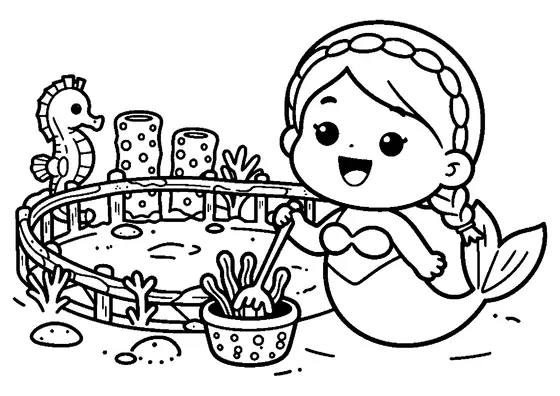
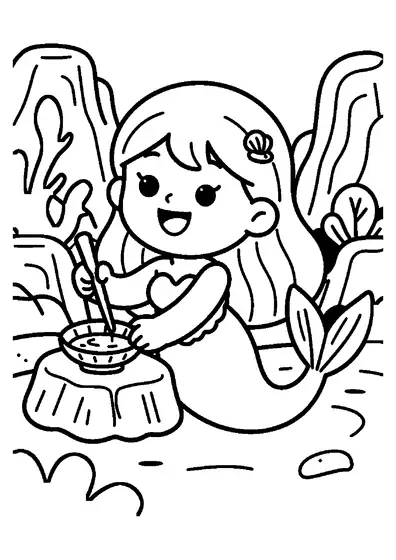
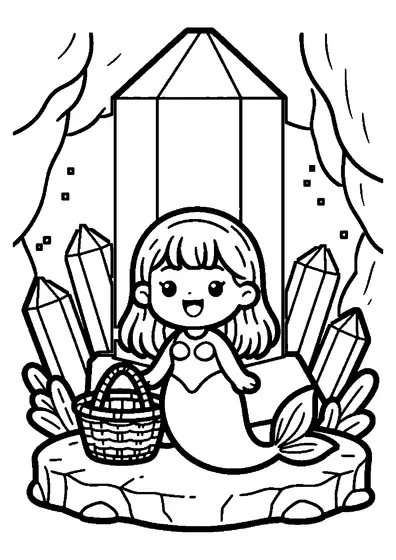
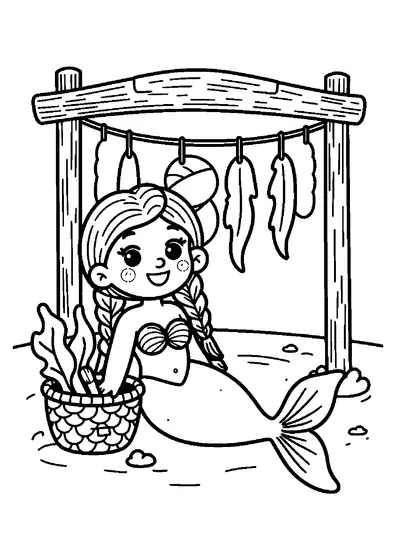
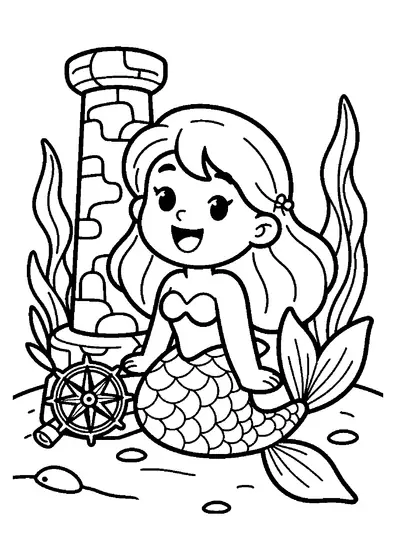
A gentle aquatic scene depicts a mermaid standing near the entrance of a sandstone house while interacting with a small crab.

A4 format (portrait), black outlines on a white background · for home and classroom use
All coloring pages: Mermaid Coloring Pages
Similar coloring pages: Mermaid Coloring Pages

What else can you print? Free, no account needed
Custom Name Coloring Pages
Enter your child's name to generate a custom coloring page featuring large outline letters to color and decorate.
Open generator →Connect the Dots Generator
Eight connect-the-dots pictures across three difficulty levels. Features faint outline guides for younger children and dots only for older kids.
Open generator →Printables
Worksheets, tracing lines, mazes and dot-to-dots in A4.
Browse printables →
Underwater Sandstone Dwellings and Marine Encounters
This sea scene portrays a mermaid welcoming a little crab outside a house constructed from ocean sand. In deep marine settings, sand compacts over time into firm sandstone layers that can form natural caves and sheltered hollows. Crabs frequently explore these rocky crevices and sandy structures along the seabed in search of food and protection from larger sea predators.
Natural Wonders of Ocean Sandstone and Crustaceans
Sandstone beneath the sea forms through millions of years of mineral accumulation and pressure on sediment beds. Crabs are highly adaptable crustaceans equipped with thick exoskeletons and specialized claws that allow them to burrow into soft sand or navigate rugged stone surfaces. Many crab species spend their lives near sheltered rock formations where algae and organic detritus accumulate.
Authentic Colors of Ocean Crabs and Sandstone
- Mermaid scales: Shimmering shades of turquoise, aquamarine, lavender, or deep blue
- Crab shell: Vivid red, warm orange, or mottled brown patterns typical of coastal crustaceans
- Sandstone house: Soft beige, tan, pale yellow, and warm cream tones of compressed sea sand
- Seabed environment: Muted gray-brown sand combined with deep blue water shades