
Mermaid in a Rocky Pool
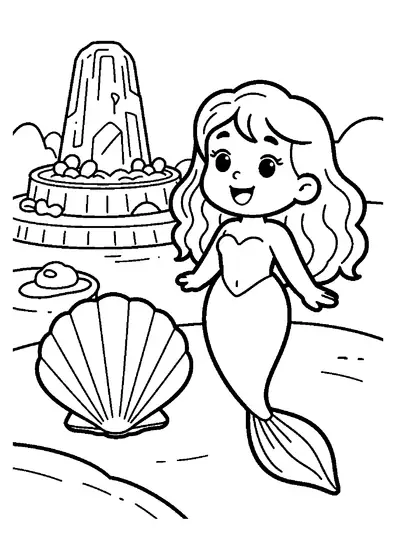
A serene mermaid rests beside a large seashell inside a secluded underwater pool enclosed by natural stone steps.

A4 format (landscape), black outlines on a white background · for home and classroom use
All coloring pages: Mermaid Coloring Pages
Similar coloring pages: Mermaid Coloring Pages




What else can you print? Free, no account needed
Custom Name Coloring Pages
Enter your child's name to generate a custom coloring page featuring large outline letters to color and decorate.
Open generator →Connect the Dots Generator
Eight connect-the-dots pictures across three difficulty levels. Features faint outline guides for younger children and dots only for older kids.
Open generator →Printables
Worksheets, tracing lines, mazes and dot-to-dots in A4.
Browse printables →
Underwater Rocky Pool
A mermaid rests within a natural underwater pool accompanied by a prominent seashell. Tiered stone steps composed of rounded rocks border the submerged basin, shaping a sheltered aquatic environment built into rock formations.
Natural Formation of Submerged Rock Pools
Submerged rock pools form when coastal tide action and water currents erode softer minerals out of coastal stone ledges. These quiet basins trap ocean water, creating stable micro-habitats protected from heavy surf and powerful offshore currents. Sheltered rock ledges frequently collect drifting seashells along their calm stone steps.
Real Colors of Submerged Rock Formations
- Stone pool steps: warm granite gray, moss green, and slate gray
- Large seashell: soft apricot, pastel yellow, or off-white
- Pool water basin: clear turquoise, aquamarine, or pale teal
- Mermaid tail: seafoam green, ocean blue, or violet