
Mermaid in a Music Pavilion
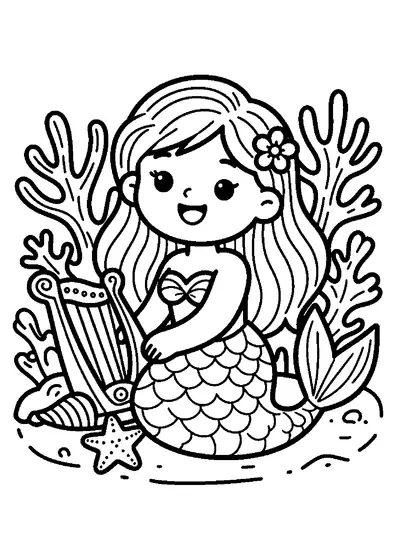
An ocean pavilion built with pillars and a shell roof hosts a mermaid playing a large harp.

A4 format (portrait), black outlines on a white background · for home and classroom use
All coloring pages: Mermaid Coloring Pages
Similar coloring pages: Mermaid Coloring Pages




What else can you print? Free, no account needed
Custom Name Coloring Pages
Enter your child's name to generate a custom coloring page featuring large outline letters to color and decorate.
Open generator →Connect the Dots Generator
Eight connect-the-dots pictures across three difficulty levels. Features faint outline guides for younger children and dots only for older kids.
Open generator →Printables
Worksheets, tracing lines, mazes and dot-to-dots in A4.
Browse printables →
Underwater Music Pavilion Architecture
Submerged pavilions built with sturdy columns offer unique acoustics beneath the sea. The wide steps lead into a sheltered structure with a shell-shaped roof designed to reflect musical sound waves through the water as a mermaid plays a large harp.
Acoustic Trivia About Ocean Instruments
Water conducts sound waves four times faster than air, which significantly changes how musical instruments sound underwater. Ancient folklore frequently describes ocean dwellers creating large harps from natural materials found along the seafloor to play soothing melodies.
Real Colors of the Underwater Scene
- Mermaid tail: Iridescent turquoise, emerald green, or seafoam
- Harp frame: Golden yellow, warm brass, or polished bronze
- Shell-shaped roof: Pale pink, soft cream, or light peach
- Columns and steps: Sandstone beige, light tan, or pearl gray