
Mermaid in a Columned Courtyard
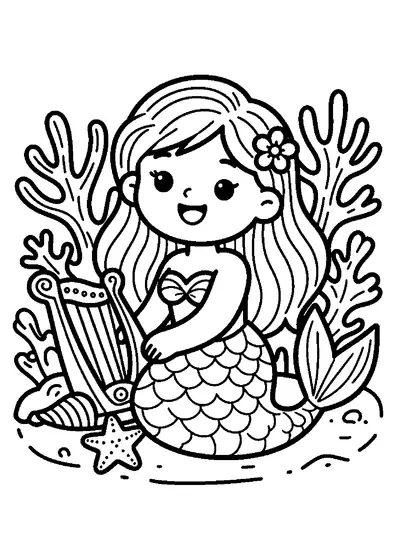
A cheerful mermaid rests on the floor of a sunken underwater courtyard among ancient stone columns, a seashell, and a clay amphora.

A4 format (portrait), black outlines on a white background · for home and classroom use
All coloring pages: Mermaid Coloring Pages
Similar coloring pages: Mermaid Coloring Pages



What else can you print? Free, no account needed
Custom Name Coloring Pages
Enter your child's name to generate a custom coloring page featuring large outline letters to color and decorate.
Open generator →Connect the Dots Generator
Eight connect-the-dots pictures across three difficulty levels. Features faint outline guides for younger children and dots only for older kids.
Open generator →Printables
Worksheets, tracing lines, mazes and dot-to-dots in A4.
Browse printables →
Underwater Ruins and Ancient Columns
Deep below the ocean surface, a smiling mermaid sits in a sunken stone courtyard surrounded by classic architectural columns, a large shell, and an ancient amphora vessel.
Myths of Sunken Courtyards and Ocean Artefacts
Legendary tales often portray underwater kingdoms built around submerged stone architecture reminiscent of ancient Mediterranean palaces. Amphoras were terracotta clay jars used in antiquity to transport olive oil and wine across sea routes, frequently found in shipwreck sites. Large seashells resting on sandy ocean floors serve as natural shelters for marine microorganisms and small crabs.
Colors of Submerged Ruins and Sea Life
- Mermaid tail: shimmering emerald green, iridescent turquoise, or pink
- Ancient stone columns: aged pale gray or algae-stained green stone
- Terracotta amphora: warm earthy rust orange or reddish brown clay
- Large seashell: pearlescent pink, cream, or peach coral
- Ocean floor sand: soft golden tan or light beige sand