
Mermaid by a Sunken Sundial
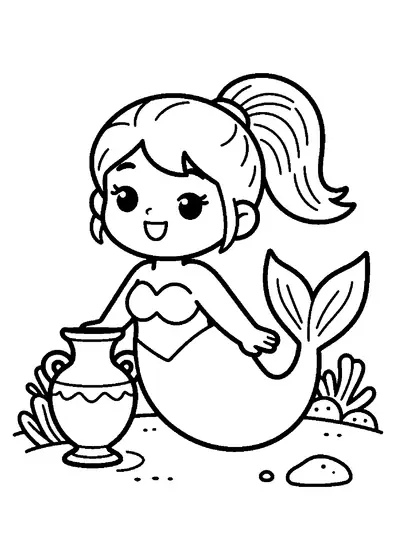
An underwater scene depicts a braided mermaid swimming around a carved stone sundial resting on the seafloor.

A4 format (portrait), black outlines on a white background · for home and classroom use
All coloring pages: Mermaid Coloring Pages
Similar coloring pages: Mermaid Coloring Pages


What else can you print? Free, no account needed
Custom Name Coloring Pages
Enter your child's name to generate a custom coloring page featuring large outline letters to color and decorate.
Open generator →Connect the Dots Generator
Eight connect-the-dots pictures across three difficulty levels. Features faint outline guides for younger children and dots only for older kids.
Open generator →Printables
Worksheets, tracing lines, mazes and dot-to-dots in A4.
Browse printables →
Exploring the Sunken Sundial
A mermaid with long braided hair glides around a stone sundial positioned on the ocean floor. The carved timekeeping instrument features sculpted hour markings resting directly on the sandy seabed. Sunlight filtering down through the sea surface illuminates the ancient stone surface.
Timekeeping and Sunlight Beneath the Waves
Sundials require direct sunlight to cast shadows and measure time accurately throughout the day. While surface sundials rely on clear skies, light penetrating shallow seawater decreases rapidly with depth due to absorption and scattering. In coastal waters, sunlight usually reaches down to a depth of around two hundred meters, where underwater shadows can still form in clear conditions.
Colors of Sundials and Ocean Environments
- Carved stone sundial: sandstone beige, granite gray, and mossy green
- Mermaid braids and hair: golden blonde, auburn brown, or dark chestnut
- Ocean floor sand: pale yellow, tan, and soft cream
- Mermaid tail scales: ocean blue, pearl pink, or shimmering turquoise
- Deep seawater: sapphire blue, indigo, and seafoam green