
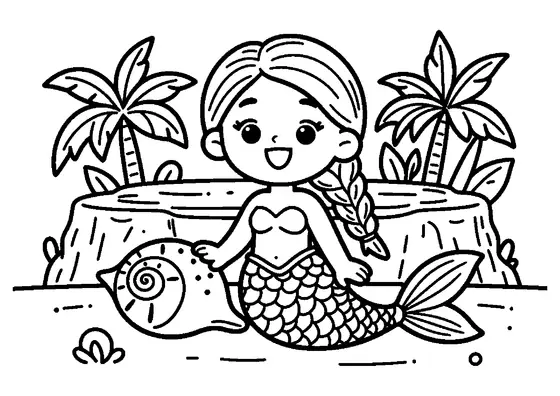
Mermaid Beside a Sunken Ship’s Wheel
A cheerful mythical sea creature rests beside a large wooden steering wheel from a historic ocean vessel.

A4 format (portrait), black outlines on a white background · for home and classroom use
All coloring pages: Mermaid Coloring Pages
Similar coloring pages: Mermaid Coloring Pages



What else can you print? Free, no account needed
Custom Name Coloring Pages
Enter your child's name to generate a custom coloring page featuring large outline letters to color and decorate.
Open generator →Connect the Dots Generator
Eight connect-the-dots pictures across three difficulty levels. Features faint outline guides for younger children and dots only for older kids.
Open generator →Printables
Worksheets, tracing lines, mazes and dot-to-dots in A4.
Browse printables →
Historic Ship Navigation Relics Deep at Sea
A smiling mermaid rests on the ocean floor alongside the old wooden steering wheel of a sunken ship. The large timber wheel from an ancient ocean vessel lies forgotten on the seabed as the friendly sea maiden rests beside it.
How Historic Ships Were Steered
Ship wheels, also known as helm wheels, were introduced in the early eighteenth century to control a vessel's rudder via a system of ropes and pulleys. Before the helm wheel was invented, sailors used a simple wooden lever called a whipstaff to change direction. Dense hardwoods like teak, oak, and mahogany were chosen for ship construction because these woods resist rot when exposed to saltwater.
Authentic Colors of Ocean Relics and Sea Life
- Old ship steering wheel: dark waterlogged oak brown, weathered charcoal gray, or mahogany
- Metal wheel hub and fittings: tarnished brass yellow, rusted iron brown, or copper green
- Mermaid tail: teal, aquamarine, or deep ocean blue
- Mermaid hair: sun-bleached blonde, fiery copper red, or midnight black
- Ocean floor environment: soft sandy beige, light brown silt, or muted tan