
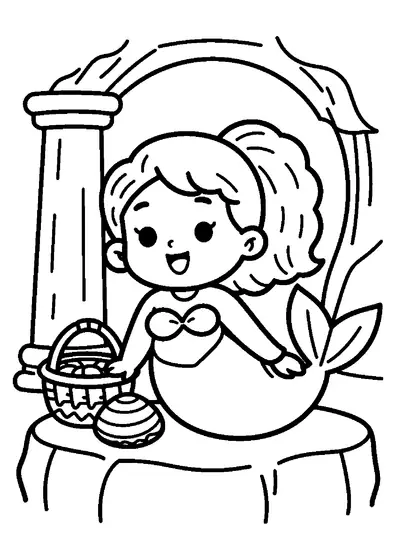
Mermaid Beside a Sunken Treasure Chest
A cheerful mermaid swims near an open treasure chest resting along the ocean floor.

A4 format (landscape), black outlines on a white background · for home and classroom use
All coloring pages: Mermaid Coloring Pages
Similar coloring pages: Mermaid Coloring Pages


What else can you print? Free, no account needed
Custom Name Coloring Pages
Enter your child's name to generate a custom coloring page featuring large outline letters to color and decorate.
Open generator →Connect the Dots Generator
Eight connect-the-dots pictures across three difficulty levels. Features faint outline guides for younger children and dots only for older kids.
Open generator →Printables
Worksheets, tracing lines, mazes and dot-to-dots in A4.
Browse printables →
Underwater Discoveries on the Seabed
A swimming mermaid explores the deep ocean floor beside an old open treasure chest. Wooden chests were historically used aboard sailing vessels to transport valuable items across maritime trading routes. When ships encountered storms, lost cargo sometimes settled onto sandy ocean bottoms, becoming part of underwater marine landscapes.
Historical Artifacts on the Ocean Floor
Sunken chests preserved on seabed sediment often become artificial habitats for small marine creatures. Over decades, iron straps rust while saltwater causes wood to darken and attract marine organisms like barnacles and algae. Historical shipwrecks discovered by marine archaeologists help reveal details about historic trade routes and maritime navigation.
Realistic Hues of Seabed Features and Maritime Treasures
- Sunken wooden chest: Dark weathered oak brown, deep gray, or algae-covered olive brown
- Metal chest fittings: Oxidized bronze green, rusted orange-brown, or tarnished dark iron
- Ocean floor sand: Pale cream, tan, or muted grayish beige
- Ocean water depth: Deep navy blue, rich teal, or muted blue-green
- Marine growth on wood: Dull forest green or dark brown algae tones