
Mermaid on an Underwater Rock Ledge
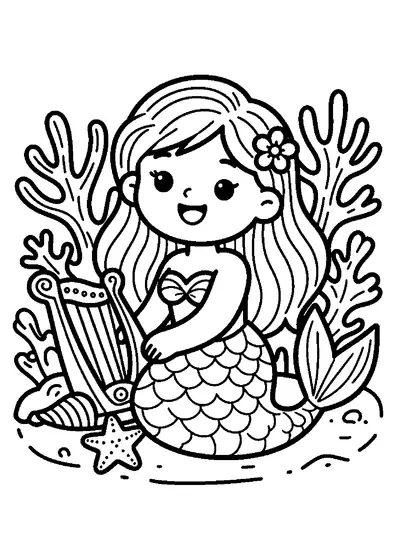
A quiet seabed scene portraying a mermaid sitting on a natural rock ledge while looking into a polished stone mirror.

A4 format (landscape), black outlines on a white background · for home and classroom use
All coloring pages: Mermaid Coloring Pages
Similar coloring pages: Mermaid Coloring Pages


What else can you print? Free, no account needed
Custom Name Coloring Pages
Enter your child's name to generate a custom coloring page featuring large outline letters to color and decorate.
Open generator →Connect the Dots Generator
Eight connect-the-dots pictures across three difficulty levels. Features faint outline guides for younger children and dots only for older kids.
Open generator →Printables
Worksheets, tracing lines, mazes and dot-to-dots in A4.
Browse printables →
Rock Ledges and Polished Mirrors Underwater
Rocky seabed formations create elevated ledges where marine currents sweep away loose silt and sediment. A mermaid resting on a stone shelf with an underwater mirror reflects traditional marine folklore where ocean dwellers use polished minerals. Smooth stone mirrors made from obsidian or dense basalt were historically crafted before glass silvering was invented.
Facts About Natural Stone Mirrors
Before modern glass mirrors existed, ancient civilizations polished dark minerals like volcanic obsidian, pyrite, and hematite to create reflective surfaces. Highly polished stone reflects light clearly when dry and maintains a glossy shine when submerged underwater. Dense volcanic glass resists saltwater corrosion, preserving smooth polished surfaces even when exposed to sea moisture.
Real Colors of Seabed Rock Formations
- Mermaid tail: coral red, warm copper, or soft pastel lavender
- Volcanic stone mirror frame: dark charcoal black, obsidian shiny gray, or deep brown
- Submerged rock ledge: dark brown, basalt gray, or tan sandstone
- Mirror reflective center: dark glossy gray or reflective metallic black