
Knight Fixing a Merchant's Shelf
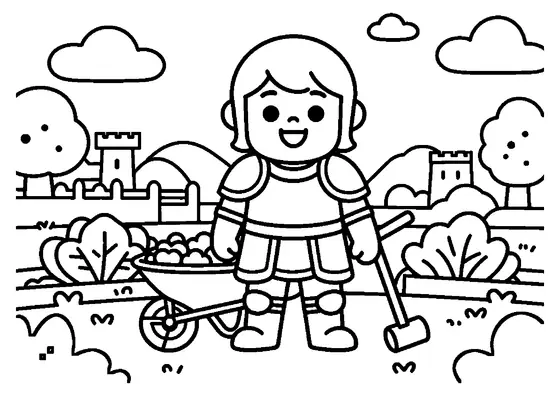
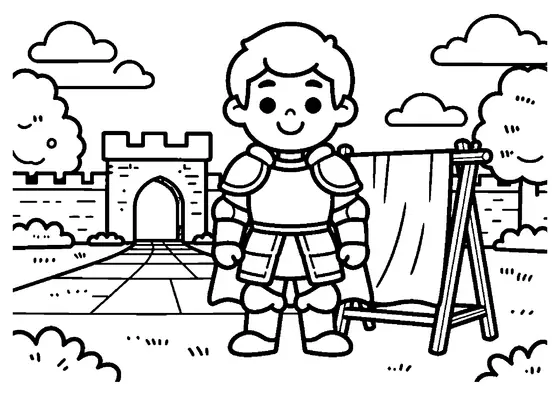
Woodworking tools help restore a market stall shelf in a busy trade area.

A4 format (landscape), black outlines on a white background · for home and classroom use
All coloring pages: Knights and Castles Coloring Pages
Similar coloring pages: Knights and Castles Coloring Pages



What else can you print? Free, no account needed
Custom Name Coloring Pages
Enter your child's name to generate a custom coloring page featuring large outline letters to color and decorate.
Open generator →Connect the Dots Generator
Eight connect-the-dots pictures across three difficulty levels. Features faint outline guides for younger children and dots only for older kids.
Open generator →Printables
Worksheets, tracing lines, mazes and dot-to-dots in A4.
Browse printables →
Repairing a Wooden Market Shelf
A helpful knight aids a local merchant by repairing a wooden display shelf at a market stall. Holding a wooden mallet and a fresh board, the helper restores the sturdy structure in the market background. Well-maintained shelves allowed merchants to display their trade goods safely.
Carpentry Practices in Medieval Markets
Traders constructed portable wooden stalls using simple mortise and tenon joints held together by wooden pegs rather than expensive iron nails. Carpenters relied heavily on wooden mallets to drive pegs and join timber frames without splitting the hand-planed display boards.
Real Colors of Market Woodwork
- Wooden mallet: natural light beechwood color
- Shelf board: honey brown pine timber
- Market stall frame: weathered gray brown wood
- Knight armor: burnished steel gray metal