
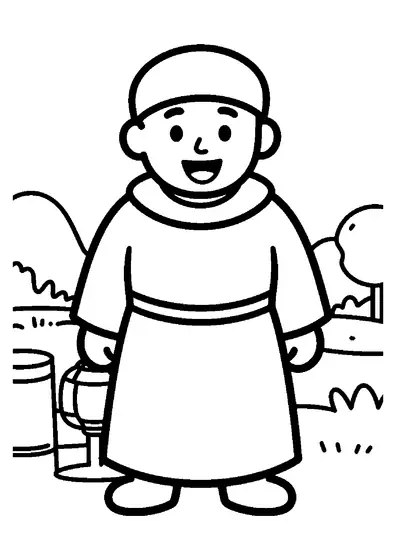
Castle Keeper with a Lifebuoy
Safety gear made of buoyant timber is held by a fortress keeper responsible for monitoring the surrounding moat.

A4 format (portrait), black outlines on a white background · for home and classroom use
All coloring pages: Knights and Castles Coloring Pages
Similar coloring pages: Knights and Castles Coloring Pages



What else can you print? Free, no account needed
Custom Name Coloring Pages
Enter your child's name to generate a custom coloring page featuring large outline letters to color and decorate.
Open generator →Connect the Dots Generator
Eight connect-the-dots pictures across three difficulty levels. Features faint outline guides for younger children and dots only for older kids.
Open generator →Printables
Worksheets, tracing lines, mazes and dot-to-dots in A4.
Browse printables →
Castle Warden with Moat Safety Gear
A fortress keeper holds wooden emergency safety equipment designed for water rescue near a moat. Castle staff monitored deep water channels surrounding defensive walls to prevent drowning accidents among visitors and guards.
Historical Water Safety Around Castle Moats
Castle moats were deep defensive water trenches designed to block enemy siege towers and ladder attacks. Because medieval armor was heavy and swimming skills were rare, fortresses positioned wooden rescue rings and long poles near moat bridges for emergency situations.
Realistic Colors of Wooden Safety Gear and Water
- Wooden lifebuoy ring: Natural oak brown, reddish cedar, or painted white
- Lifebuoy rope bindings: Off-white hemp or light tan cordage
- Moat water: Deep blue-green, murky olive, or dark teal
- Warden tunic: Deep crimson red, dark brown, or forest green
- Warden hair: Ash blonde, dark brown, or silver gray