
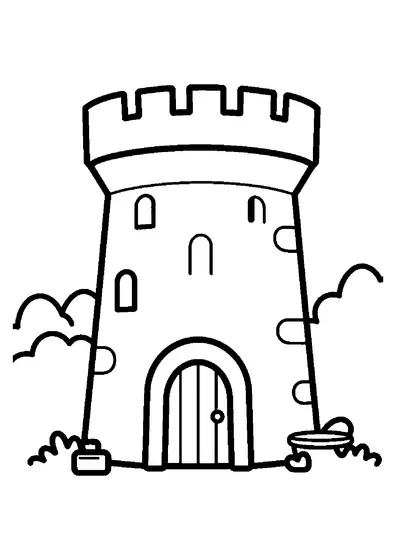
Castle with Round Towers
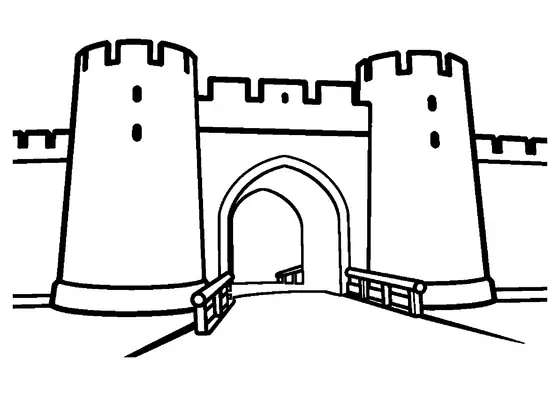
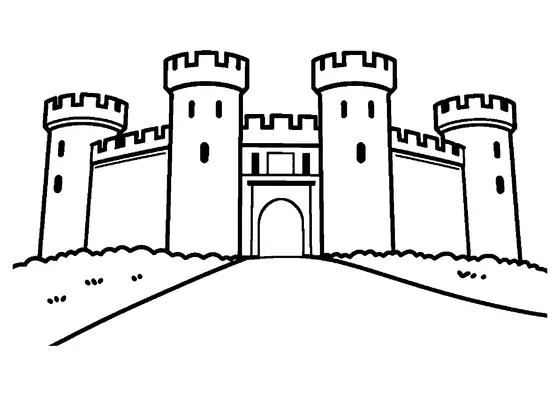
This page features a medieval fortress built with sturdy round towers and broad defensive sections.

A4 format (landscape), black outlines on a white background · for home and classroom use
All coloring pages: Knights and Castles Coloring Pages
Similar coloring pages: Knights and Castles Coloring Pages

What else can you print? Free, no account needed
Custom Name Coloring Pages
Enter your child's name to generate a custom coloring page featuring large outline letters to color and decorate.
Open generator →Connect the Dots Generator
Eight connect-the-dots pictures across three difficulty levels. Features faint outline guides for younger children and dots only for older kids.
Open generator →Printables
Worksheets, tracing lines, mazes and dot-to-dots in A4.
Browse printables →
Medieval Fortress Architecture
A medieval castle with round towers represents a classic design used to protect broad fortress sections. Round structures were naturally stronger against siege weapons than square ones because incoming stones would glance off curved masonry walls.
Why Round Towers Were Built
Curved walls eliminated the vulnerable corners found on square towers, making it harder for attackers to dig beneath the foundations. Additionally, defender archers inside round towers enjoyed an expanded field of view across the surrounding landscape.
Natural Colors of a Medieval Fortress
- Castle stone walls: light gray, beige, or warm tan depending on the quarried rock
- Tower roofs: slate gray, dark red, or weathered clay brown
- Heavy wooden gates: dark oak brown or natural weathered gray wood
- Iron reinforcements: dark gray or black forged iron