
Thumbelina in a Tulip Garden
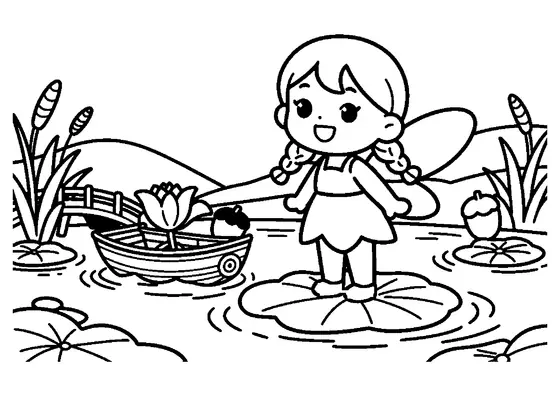
Tiny Thumbelina rests on a broad green leaf along a stone path surrounded by giant tulip blossoms towering over her.

A4 format (portrait), black outlines on a white background · for home and classroom use
All coloring pages: Fairy Tale Coloring Pages
Similar coloring pages: Fairy Tale Coloring Pages


What else can you print? Free, no account needed
Custom Name Coloring Pages
Enter your child's name to generate a custom coloring page featuring large outline letters to color and decorate.
Open generator →Connect the Dots Generator
Eight connect-the-dots pictures across three difficulty levels. Features faint outline guides for younger children and dots only for older kids.
Open generator →Printables
Worksheets, tracing lines, mazes and dot-to-dots in A4.
Browse printables →
Thumbelina Resting in a Blooming Tulip Garden
In this fairy-tale garden landscape, Thumbelina sits comfortably upon a large green leaf. The garden environment features towering tulip flowers that bloom high above her tiny frame, creating an oversized botanical surrounding. A rustic stone path winds through the garden beds beneath the giant floral petals and lush garden vegetation.
Botanical Facts About Tulips and Garden Paths
Tulips are perennial spring bulbs that belong to the lily family, famous for their cup-shaped blossoms that open in response to sunlight. During cool cloudy weather or at night, tulip petals close tightly to protect their interior reproductive organs from moisture and frost. Natural stone paths in gardens help regulate soil temperature while providing stable walking routes that prevent soil compaction around flower roots.
Real Colors of the Garden Setting
- Thumbelina's dress: Rose pink, lavender, or soft violet
- Tulip petals: Bright crimson red, sunshine yellow, or soft pink
- Garden leaf: Vibrant leaf green or fresh lime green
- Stone path: Slate gray, pebble tan, or cobblestone brown
- Soil and earth: Rich dark brown or damp charcoal soil