
The Ugly Duckling by a Farm Pond
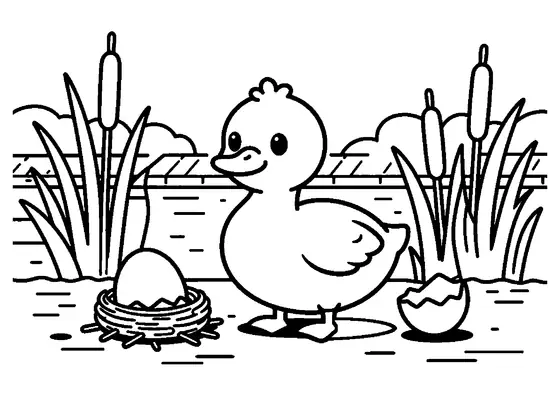
A young duckling rests along the quiet shoreline of a farm pond surrounded by tall reeds and a wooden fence.

A4 format (landscape), black outlines on a white background · for home and classroom use
All coloring pages: Fairy Tale Coloring Pages
Similar coloring pages: Fairy Tale Coloring Pages



What else can you print? Free, no account needed
Custom Name Coloring Pages
Enter your child's name to generate a custom coloring page featuring large outline letters to color and decorate.
Open generator →Connect the Dots Generator
Eight connect-the-dots pictures across three difficulty levels. Features faint outline guides for younger children and dots only for older kids.
Open generator →Printables
Worksheets, tracing lines, mazes and dot-to-dots in A4.
Browse printables →
A Quiet Scene at the Farm Pond
This countryside illustration depicts the early chapter of The Ugly Duckling tale at the edge of a farmyard. High reeds grow near the water's edge while a wooden fence marks the boundary of the farm behind the young bird. The peaceful pond shoreline reflects the natural environment of domestic waterfowl.
Facts About Ducklings and Farm Ponds
Young ducklings are covered in soft down feathers that protect them from cool air shortly after hatching. Farm ponds provide an ideal habitat rich in aquatic plants, insects, and small crustaceans that young waterfowl need for growth. Ducks use their waterproof feathers, coated with natural oils from a special gland, to stay dry while swimming.
Natural Colors of the Farmyard Shore
- Duckling down: Soft brownish gray or muted yellow tones
- Pond water: Deep greenish blue or murky olive reflection
- Reed stalks: Bright green in summer or golden tan in autumn
- Wooden fence: Weathered gray or natural oak brown