
Cinderella in the Manor Pantry
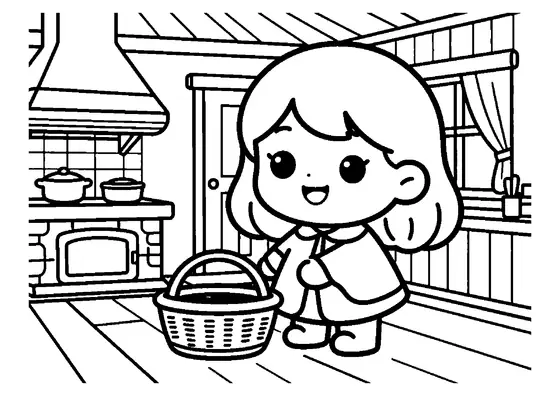
A cheerful Cinderella gathers food supplies inside a traditional manor pantry.

A4 format (portrait), black outlines on a white background · for home and classroom use
All coloring pages: Fairy Tale Coloring Pages
Similar coloring pages: Fairy Tale Coloring Pages



What else can you print? Free, no account needed
Custom Name Coloring Pages
Enter your child's name to generate a custom coloring page featuring large outline letters to color and decorate.
Open generator →Connect the Dots Generator
Eight connect-the-dots pictures across three difficulty levels. Features faint outline guides for younger children and dots only for older kids.
Open generator →Printables
Worksheets, tracing lines, mazes and dot-to-dots in A4.
Browse printables →
Inside the Manor Pantry
Manor pantries in historic estates were dedicated storage rooms designed to keep dry food supplies fresh and organized. Cinderella smiles while holding a bowl near a sack of grain, surrounded by wooden shelves and handmade clay pots.
Facts About Historical Manor Pantries
Historic manor pantries were constructed on the cool side of houses to prevent grain, flour, and dried goods from spoiling quickly. Clay pots were favored for food storage because earthenware naturally insulated ingredients from heat and moisture variations.
Authentic Colors of a Historic Pantry
- Cinderella dress: muted blue, brown, or simple beige fabric
- Clay pots: terracotta orange, rust brown, or unglazed gray
- Wooden shelves: dark oak brown or warm pine wood
- Sack of grain: light beige burlap or cream linen
- Food bowl: ceramic white, brown, or painted yellow