
Dragon in a Waterfall Cave
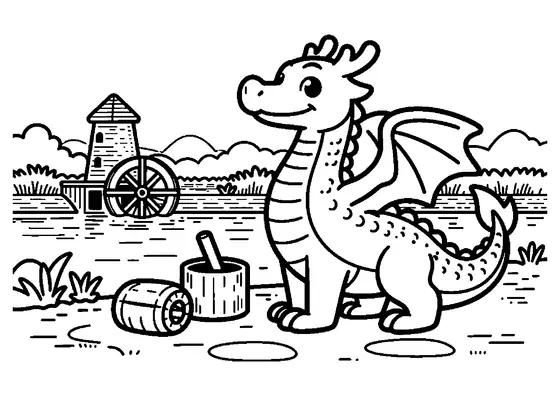
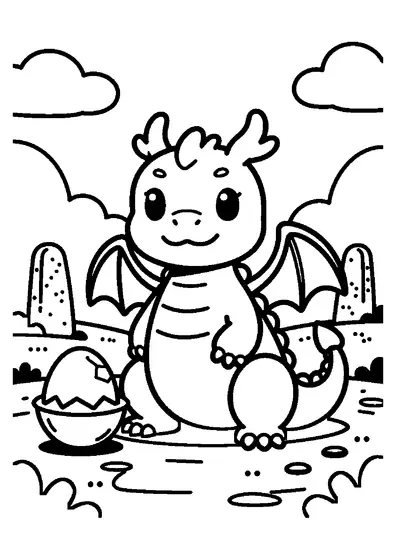
Beside a wide rushing waterfall, a water dragon with a finned tail rests on cave rocks near a seashell and a clear pool.

A4 format (landscape), black outlines on a white background · for home and classroom use
All coloring pages: Dragon Coloring Pages
Similar coloring pages: Dragon Coloring Pages



What else can you print? Free, no account needed
Custom Name Coloring Pages
Enter your child's name to generate a custom coloring page featuring large outline letters to color and decorate.
Open generator →Connect the Dots Generator
Eight connect-the-dots pictures across three difficulty levels. Features faint outline guides for younger children and dots only for older kids.
Open generator →Printables
Worksheets, tracing lines, mazes and dot-to-dots in A4.
Browse printables →
Water Dragon at the Waterfall Grotto
Underground streams and mountain rivers frequently cascade over rocky ledges into hidden grotto pools filled with smooth stones. In this aquatic cavern, a dragon featuring a finned tail relaxes on flat rock ledges beside a sea shell, splashing waves, and a wide waterfall.
Grotto Waterfalls and Aquatic Environments
Waterfall caves form when fast-flowing water erodes soft rock beneath harder upper ledges, creating hollow chambers behind cascading water curtains. Finned tails are biological adaptations seen in aquatic creatures like fish and whales, helping them steer efficiently through water currents. Shells are often carried into river grottos by moving water or left from prehistoric sea deposits.
Natural Colors of Waterfall Grottos
- Water dragon scales: turquoise, seafoam green, or deep ocean blue
- Dragon finned tail: translucent aquatic blue, pale teal, or soft mint green
- Seashell: pearl white, pale pink, coral orange, or cream beige
- Waterfall foam and waves: frothy white, light sky blue, and clear teal
- Cave rock ledges: wet slate gray, mossy green, and dark brown granite