
Shoe on a Shoe Last
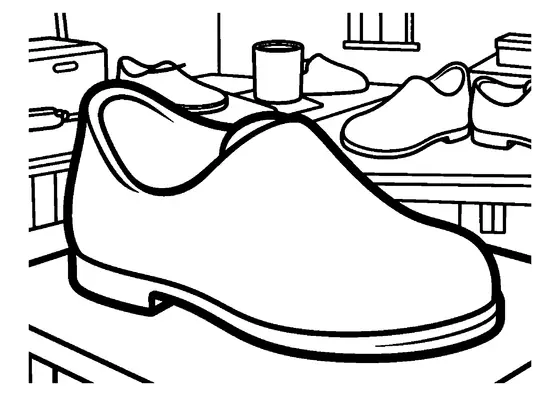
Footwear is shown during the traditional crafting process in a cobbler workshop.

A4 format (landscape), black outlines on a white background · for home and classroom use
All coloring pages: Jobs and Professions Coloring Pages
Similar coloring pages: Jobs and Professions Coloring Pages





What else can you print? Free, no account needed
Custom Name Coloring Pages
Enter your child's name to generate a custom coloring page featuring large outline letters to color and decorate.
Open generator →Connect the Dots Generator
Eight connect-the-dots pictures across three difficulty levels. Features faint outline guides for younger children and dots only for older kids.
Open generator →Printables
Worksheets, tracing lines, mazes and dot-to-dots in A4.
Browse printables →
Footwear Crafting in a Cobbler Workshop
This page depicts footwear placed on a shoe last during the crafting process in a cobbler workshop. The side view presents the structure of the footwear, including its thick sole, wide tongue, and laces.
Traditional Shoemaking Facts
Shoemakers use a shaped form called a last to mold footwear into the proper human foot shape during production. Historically, these forms were carved from hardwood to match specific foot sizes and widths. Today, custom footwear artisans still rely on shoe lasts to construct durable, custom-fitted footwear by hand.
Natural Colors of Shoemaking Materials
- Leather upper: Brown, tan, or black
- Shoe last base: Natural wood grain or gray metal
- Laces: White, beige, or dark brown
- Rubber sole: Black, white, or gum brown