
Number and Counting Coloring Pages
Number and counting coloring pages for kids ages 6 to 10: a big number with a matching group of animals to count, from one bison to five starfish, free to print.
46 coloring pages · page 1 of 3

Five Books Beside Number 5
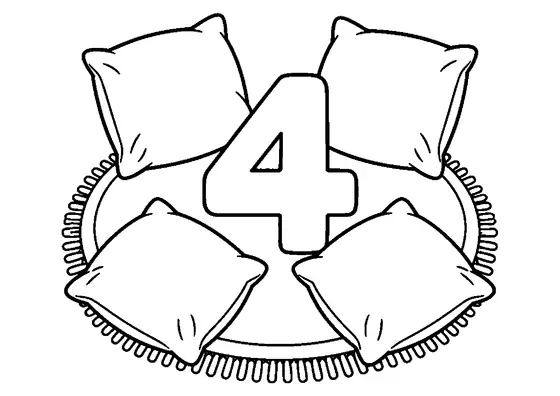
Four Cushions Around Number 4
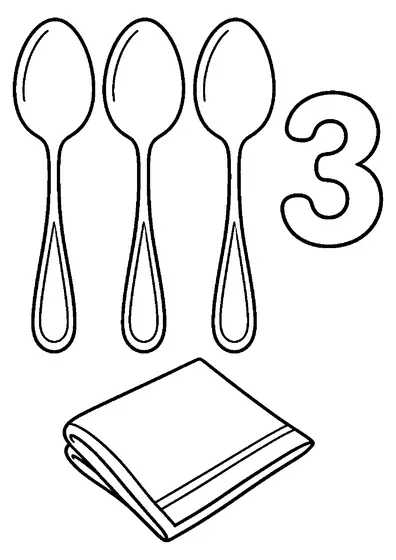
Three Spoons Beside Number 3
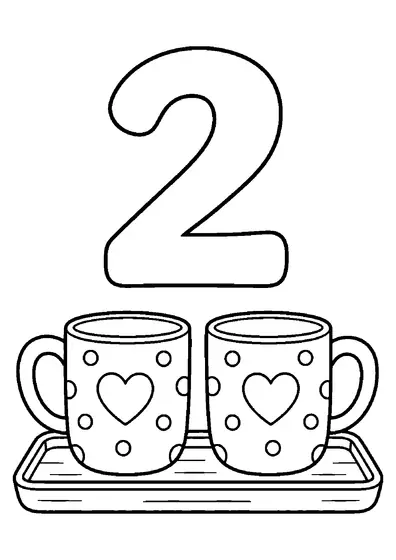
Two Mugs Beneath Number 2

One Hat Beside Number 1

BREATH Word in Geometric Arches

Three Five Seven Nine Sequence

Number 4 Above Four Tortoises

Number 4 with Four Salamanders
- Advertisement

Number 3 and Three Storks

Number 3 and Three Polar Bears

Number 3 Above Three Salmon

Number 3 with Three Armadillos

Number 2 with Two Reindeer

Number 1 with a Walking Anteater

Number 1 with a Mighty Bison

Number 5 with Five Mice

Number 5 Surrounded by Five Starfish
Number and Counting Coloring Pages — what you will find on this page
These counting coloring pages connect numbers with something kids love: animals. Each sheet shows one large number and exactly that many animals, so children can count, check their answer and color at the same time. The layouts stay clean and uncluttered, which makes the groups easy to count without losing track.
Kids can color the number 1 with a mighty bison, a walking anteater or a kangaroo, the number 2 with two reindeer, two swans, two wolves or two llamas, and the number 3 with three polar bears, three storks, three armadillos or three little pigs. Number 4 comes with four beavers, four hamsters, four meerkats or four tortoises, and number 5 with five mice or five starfish. Other pages ask kids to count on their own, such as three frogs by a leaf, four parrots on a branch, five chicks in the sunshine and six hedgehogs in a row, and a number sequence page (3, 5, 7, 9) adds a first taste of patterns.
The sheets are medium difficulty and suit kids ages 6 to 10, while preschoolers who are learning to count can use the simpler pages with a grown-up. Clear outlines and detailed habitats give enough small areas to practice pencil control and focus without crowding the animals kids need to count.
Younger kids can start with 1 and 2, where the animals are big and easy to count; older kids can take on the busier 4 and 5 pages or build simple addition problems from two sheets. Ask your child to count out loud, touch each animal as they color it and then write the number in a corner of the page.
Download any page for free and print it at home in black and white. The files are set up for A4; on US Letter paper, select "Fit to page." Everyday printer paper is fine for pencils and crayons, and a heavier sheet or cardstock is best for markers and paint.
Pair these pages with Alphabet Coloring Pages from the same Educational Coloring Pages section for a full letters-and-numbers routine.
In short
Labugen's number and counting coloring pages are free printable A4 sheets that pair a large number with a matching group of animals to count, such as one bison, three storks or five starfish. The medium-difficulty drawings are designed for kids ages 6 to 10, and younger children can use them to practice counting with a grown-up.