
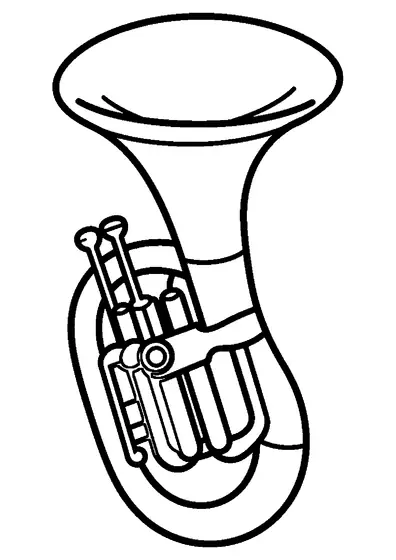
Cornet Brass Instrument
Featuring a compact frame with rounded tubing, this brass instrument delivers bright melodic notes in brass bands.

A4 format (landscape), black outlines on a white background · for home and classroom use
All coloring pages: Educational Coloring Pages
Similar coloring pages: Educational Coloring Pages


What else can you print? Free, no account needed
Custom Name Coloring Pages
Enter your child's name to generate a custom coloring page featuring large outline letters to color and decorate.
Open generator →Connect the Dots Generator
Eight connect-the-dots pictures across three difficulty levels. Features faint outline guides for younger children and dots only for older kids.
Open generator →Printables
Worksheets, tracing lines, mazes and dot-to-dots in A4.
Browse printables →
The Compact Cornet Brass Instrument
The cornet is a brass instrument closely related to the trumpet, known for its short, compact body shape and curved tubing. It includes three piston valves, a removable mouthpiece, and a rounded bell that flares out at the end of the instrument.
Fascinating Facts About the Cornet
Because of its tightly wrapped tubing, the cornet is easier to hold for long periods than longer brass instruments. Its conical bore gives the instrument a rounder, softer tone compared to the sharper sound of a standard trumpet. Cornets frequently lead the main melody lines in traditional brass bands and community ensembles.
Real Colors of a Cornet Instrument
- Cornet body: Polished brass gold or silver plating
- Mouthpiece: Silver-plated metal or clear brass
- Valve pistons: Silver nickel or stainless steel
- Finger buttons: White pearlescent or silver trim