
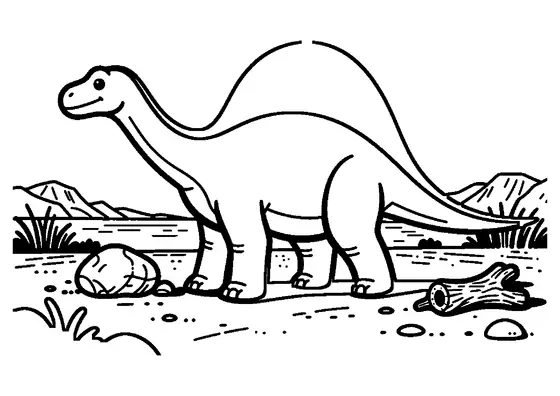
Plateosaurus in a Sandstone Basin
A large Plateosaurus stands near a nest of eggs in a sunny sandstone basin surrounded by cycad plants, rocks, and a distant volcano.

A4 format (portrait), black outlines on a white background · for home and classroom use
All coloring pages: Dinosaur Coloring Pages
Similar coloring pages: Dinosaur Coloring Pages




What else can you print? Free, no account needed
Custom Name Coloring Pages
Enter your child's name to generate a custom coloring page featuring large outline letters to color and decorate.
Open generator →Connect the Dots Generator
Eight connect-the-dots pictures across three difficulty levels. Features faint outline guides for younger children and dots only for older kids.
Open generator →Printables
Worksheets, tracing lines, mazes and dot-to-dots in A4.
Browse printables →
Plateosaurus Resting Beside a Dinosaur Nest
This prehistoric view depicts a massive Plateosaurus situated in a sunny sandstone basin next to a nest containing dinosaur eggs. Ancient cycad plants grow along the rocky ground, with rock formations and a volcano visible in the background distance.
Paleontological Facts About Plateosaurus and Triassic Habitats
Plateosaurus was one of the earliest large herbivorous dinosaurs of the Late Triassic Period, featuring a long neck for reaching high vegetation and powerful hind limbs for upright standing. Sandstone basins were common habitats during the Triassic Era, where warm desert climates created river floodplains dominated by palm-like cycad foliage.
Natural Colors of a Triassic Landscape
- Plateosaurus skin: earthy olive green or mottled reddish brown
- Dinosaur eggs: off-white to pale sand tan
- Sandstone rocks: warm beige and reddish orange
- Cycad foliage: vibrant dark green
- Distant volcano: dark basalt gray with reddish ash clouds