
Corythosaurus in a Dense Fern Forest
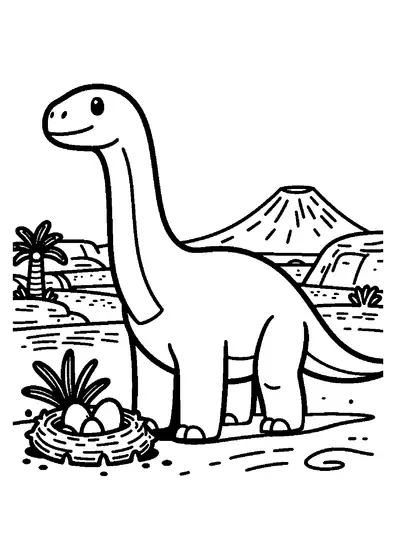
A crested Corythosaurus rests in a lush forest clearing beside a flowing stream surrounded by fern bushes and mountain hills.

A4 format (landscape), black outlines on a white background · for home and classroom use
All coloring pages: Dinosaur Coloring Pages
Similar coloring pages: Dinosaur Coloring Pages



What else can you print? Free, no account needed
Custom Name Coloring Pages
Enter your child's name to generate a custom coloring page featuring large outline letters to color and decorate.
Open generator →Connect the Dots Generator
Eight connect-the-dots pictures across three difficulty levels. Features faint outline guides for younger children and dots only for older kids.
Open generator →Printables
Worksheets, tracing lines, mazes and dot-to-dots in A4.
Browse printables →
Corythosaurus in a Forest Stream Environment
Corythosaurus was a duck-billed herbivorous dinosaur known for the distinct helmet-like crest atop its skull. This animal stands in a vibrant forest clearing near a freshwater stream. Dense ferns and prehistoric flora carpet the ground while rolling mountain hills rise in the distant background.
The Sound-Amplifying Crest of Corythosaurus
The hollow bony crest of Corythosaurus connected directly to its nasal passages, functioning like a natural resonator or trombone. By blowing air through the internal loops of the crest, these dinosaurs produced loud, low-pitched calls to communicate with herd members across long distances. This adaptation helped duck-billed dinosaurs signal danger or maintain contact in dense woodland habitats.
Colors of Woodland Dinosaurs and Ferns
- Corythosaurus crest: Bright orange, yellowish amber, or patterned brown
- Duck-billed hide: Muted forest green, tan, or grayish brown
- Fern forest: Emerald green, deep olive, or pale lime
- Mountain hills: Slate gray, distant blue, or earth brown
- Stream water: Clear blue, soft aqua, or reflective sky blue