
Mamenchisaurus Among Giant Cycad Trees
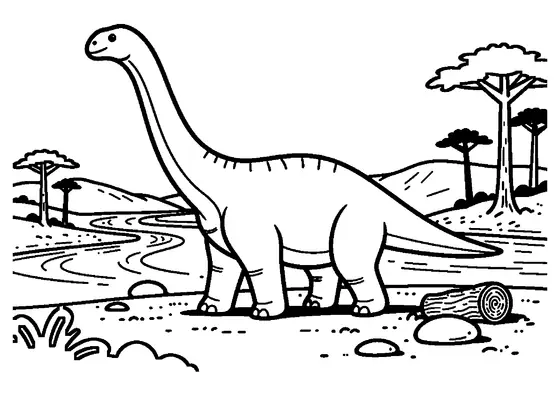
A massive Mamenchisaurus navigates an ancient forest filled with tall ginkgo trees and prehistoric cycads.

A4 format (portrait), black outlines on a white background · for home and classroom use
All coloring pages: Dinosaur Coloring Pages
Similar coloring pages: Dinosaur Coloring Pages


What else can you print? Free, no account needed
Custom Name Coloring Pages
Enter your child's name to generate a custom coloring page featuring large outline letters to color and decorate.
Open generator →Connect the Dots Generator
Eight connect-the-dots pictures across three difficulty levels. Features faint outline guides for younger children and dots only for older kids.
Open generator →Printables
Worksheets, tracing lines, mazes and dot-to-dots in A4.
Browse printables →
The Long-Necked Mamenchisaurus in its Ancient Forest
Mamenchisaurus was a giant plant-eating sauropod known for possessing one of the longest necks relative to body size of any known animal. It moves through a lush prehistoric woodland dominated by ancient ginkgo trees and giant cycads. These vast forests provided the huge quantities of foliage needed to sustain such colossal herbivores during the Late Jurassic period.
Unique Adaptations of Long-Necked Sauropods
The neck of Mamenchisaurus accounted for nearly half of its entire total body length and contained up to nineteen prolonged neck vertebrae. To keep this immense structure lightweight, its neck bones featured hollow chambers filled with air sacs connected to the respiratory system. This allowed the dinosaur to sweep its head in wide arcs across treetops without constantly moving its heavy body.
Colors of Jurassic Dinosaurs and Foliage
- Mamenchisaurus skin: Dusty grayish brown, muted earth green, or dark tan
- Ginkgo leaves: Bright golden yellow in autumn or vibrant fan green in summer
- Cycad trunks and leaves: Rough brown bark with dark green palm-like fronds
- Forest soil: Rich dark brown, ochre, or damp peat black