
Udanoceratops Discovers a Wild Berry
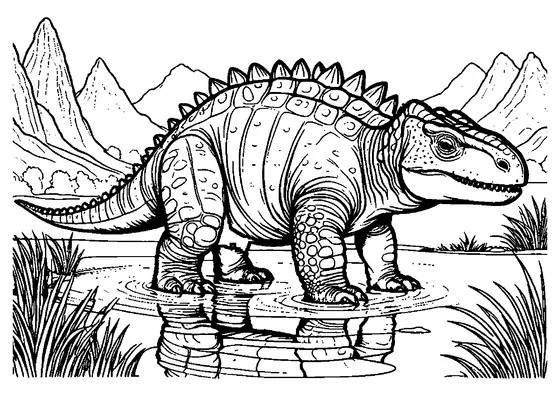
A frilled Udanoceratops discovers a wild berry in tall grass among bamboo-like plants and distant mountains.

A4 format (portrait), black outlines on a white background · for home and classroom use
All coloring pages: Herbivorous Dinosaur Coloring Pages
Similar coloring pages: Herbivorous Dinosaur Coloring Pages


What else can you print? Free, no account needed
Custom Name Coloring Pages
Enter your child's name to generate a custom coloring page featuring large outline letters to color and decorate.
Open generator →Connect the Dots Generator
Eight connect-the-dots pictures across three difficulty levels. Features faint outline guides for younger children and dots only for older kids.
Open generator →Printables
Worksheets, tracing lines, mazes and dot-to-dots in A4.
Browse printables →
Udanoceratops and the Wild Berry
The dinosaur stands in a prehistoric clearing and directs its attention toward fruit nestled in the grass. Plant stems rise behind it, while mountain shapes mark the distant landscape. Its prominent frill, the berry, and the surrounding vegetation combine a close-up food discovery with a broader wilderness setting.
Curious Facts About Udanoceratops
Udanoceratops was a plant-eating ceratopsian known from fossils found in Asia. Unlike some of its more famous relatives, it did not have large facial horns, but it possessed a strong beak and a deep jaw suited to processing tough vegetation. Wild berries are fruits that grow without cultivation and often help plants disperse seeds when animals eat them.
Colors Found in Nature
- Udanoceratops skin: its real coloration is unknown; dusty brown, tan, olive, or subdued green are natural possibilities
- Beak and claws: cream, beige, gray-brown, or dark brown
- Wild berry: red, blue, purple, black, or orange depending on the plant species
- Grass and bamboo-like stems: greens ranging from pale new growth to deep mature foliage
- Distant mountains: gray, brown, muted blue, or violet when seen through atmospheric haze