
Ankylosaurus with a Large Fall Leaf
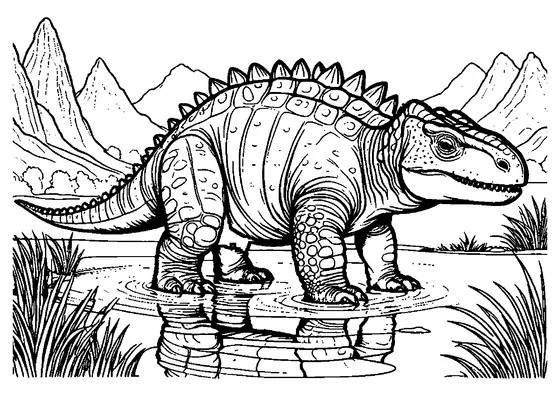
A spiky Ankylosaurus stands among broad leaves that fill the surrounding autumn plant scene.

A4 format (portrait), black outlines on a white background · for home and classroom use
All coloring pages: Herbivorous Dinosaur Coloring Pages
Similar coloring pages: Herbivorous Dinosaur Coloring Pages


What else can you print? Free, no account needed
Custom Name Coloring Pages
Enter your child's name to generate a custom coloring page featuring large outline letters to color and decorate.
Open generator →Connect the Dots Generator
Eight connect-the-dots pictures across three difficulty levels. Features faint outline guides for younger children and dots only for older kids.
Open generator →Printables
Worksheets, tracing lines, mazes and dot-to-dots in A4.
Browse printables →
Ankylosaurus Among Large Fall Leaves
The low, armored dinosaur is surrounded by oversized leaves, some of which continue beyond the edges of the scene. Rows of protective plates and spikes cover its back, giving its body a rugged appearance among the softer leaf shapes. The open area above one side of the animal keeps part of the setting uncluttered.
Curious Facts About Ankylosaurus
Ankylosaurus was a plant eater whose broad muzzle allowed it to gather low-growing vegetation. Its armor consisted of bony structures called osteoderms that formed within the skin. Seasonal leaves change color when green chlorophyll breaks down, allowing yellow and orange pigments to become more visible.
Realistic Colors for Ankylosaurus and Fall Leaves
- Ankylosaurus skin: its exact color is unknown; muted brown, olive green, or earthy gray are plausible
- Back armor and spikes: darker brown, charcoal, or stone-gray shades
- Underbelly: tan or another lighter earth tone
- Fall leaves: yellow, orange, russet, red, or brown
- Leaf veins and stems: greenish brown, warm brown, or deep red-brown