
Scelidosaurus in a Puddle
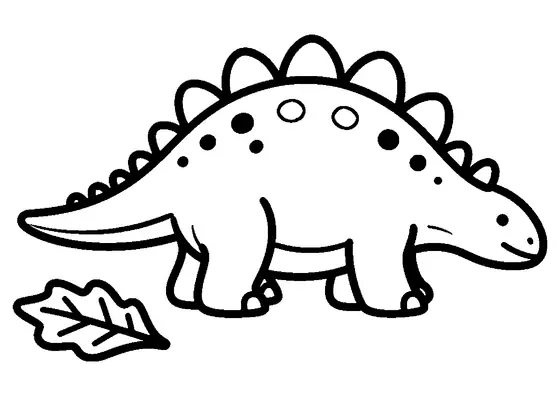
An armored Scelidosaurus stands angled with one front foot dipped into a shallow rain puddle.

A4 format (landscape), black outlines on a white background · for home and classroom use
All coloring pages: Herbivorous Dinosaur Coloring Pages
Similar coloring pages: Herbivorous Dinosaur Coloring Pages



What else can you print? Free, no account needed
Custom Name Coloring Pages
Enter your child's name to generate a custom coloring page featuring large outline letters to color and decorate.
Open generator →Connect the Dots Generator
Eight connect-the-dots pictures across three difficulty levels. Features faint outline guides for younger children and dots only for older kids.
Open generator →Printables
Worksheets, tracing lines, mazes and dot-to-dots in A4.
Browse printables →
Scelidosaurus Stepping Into a Shallow Puddle
Scelidosaurus was an early armored herbivorous dinosaur covered in parallel rows of bony studs and armor plates along its back and sides. Positioned at an angle, the heavy quadruped steps into a shallow puddle of water. Its sturdy legs provided balance while navigating wet ground during the Early Jurassic period.
Historical Facts About Scelidosaurus
Scelidosaurus fossils have often been discovered in ancient marine and mud deposits, suggesting these dinosaurs inhabited coastal river valleys with frequent rain. The bony armored studs embedded directly in its skin offered protection against early predatory dinosaurs. Shallow rain puddles provided essential drinking spots for heavy herbivores traveling across coastal floodplains.
Natural Palette for Scelidosaurus and Water Elements
- Scelidosaurus body skin: dark olive green, slate gray, or earthy brown
- Armored back plates: charcoal gray, dark timber brown, or aged bone ivory
- Scelidosaurus underbelly: lighter tan, pale beige, or soft gray
- Shallow puddle water: sky blue, reflective watery gray, or murky brown-blue
- Claws and toe pads: dark gray or muddy blackish-brown