
Kosmoceratops by a Forest Mushroom
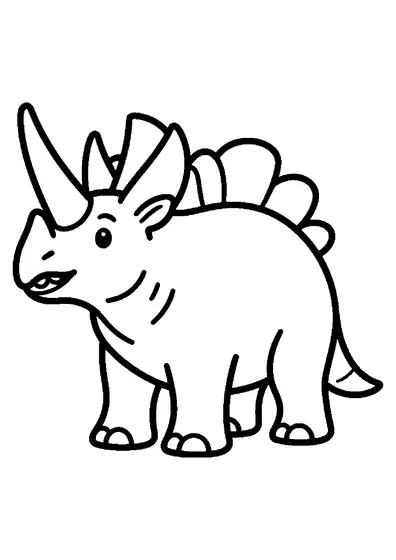
A Kosmoceratops displays its distinctive head frill while standing beside a giant mushroom in a sunlit forest clearing.

A4 format (portrait), black outlines on a white background · for home and classroom use
All coloring pages: Herbivorous Dinosaur Coloring Pages
Similar coloring pages: Herbivorous Dinosaur Coloring Pages




What else can you print? Free, no account needed
Custom Name Coloring Pages
Enter your child's name to generate a custom coloring page featuring large outline letters to color and decorate.
Open generator →Connect the Dots Generator
Eight connect-the-dots pictures across three difficulty levels. Features faint outline guides for younger children and dots only for older kids.
Open generator →Printables
Worksheets, tracing lines, mazes and dot-to-dots in A4.
Browse printables →
Kosmoceratops in a Sunlit Woodland Clearing
A Kosmoceratops stands in a sunny forest clearing alongside an oversized mushroom. The horned dinosaur features its elaborate neck shield while positioned in the middle of a woodland habitat. Sunlight filters through the forest setting, illuminating the natural plant growth around the prehistoric herbivore.
Scientific Information on Kosmoceratops and Fungi
Kosmoceratops is famous for having fifteen horns or horn-like structures on its head, making its skull one of the most ornate ever discovered. Mushrooms and other fungi play an important role in forest ecosystems by decomposing organic material and enriching the soil. Prehistoric woodlands provided humid, shaded ground conditions ideal for ancient fungal species to grow alongside low vegetation.
Real Colors of Horned Dinosaurs and Woodland Fungi
- Kosmoceratops frill and horns: Creamy beige, pale ivory, or dark charcoal gray highlights
- Kosmoceratops body skin: Warm ochre brown, dusty olive, or sandy tan
- Giant forest mushroom cap: Chestnut brown, terracotta red, or cream with specks
- Mushroom stem: Pale off-white, light gray, or beige