
Deinocheirus by the Reed Pond
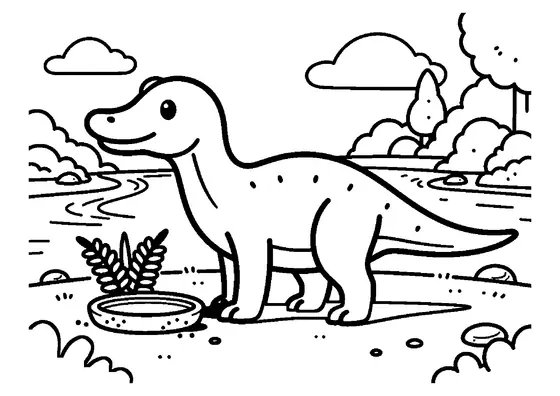
A peaceful Deinocheirus rests beside a calm wetland body of water surrounded by floating water lilies and gathered river reeds.

A4 format (portrait), black outlines on a white background · for home and classroom use
All coloring pages: Herbivorous Dinosaur Coloring Pages
Similar coloring pages: Herbivorous Dinosaur Coloring Pages


What else can you print? Free, no account needed
Custom Name Coloring Pages
Enter your child's name to generate a custom coloring page featuring large outline letters to color and decorate.
Open generator →Connect the Dots Generator
Eight connect-the-dots pictures across three difficulty levels. Features faint outline guides for younger children and dots only for older kids.
Open generator →Printables
Worksheets, tracing lines, mazes and dot-to-dots in A4.
Browse printables →
Prehistoric Wetland Habitats of Deinocheirus
A gentle Deinocheirus rests by a quiet wetland pond near a basket filled with gathered reeds. Broad water lily leaves float on the calm water surface, capturing the tranquil environment of prehistoric river basins.
Unique Characteristics of Deinocheirus
Deinocheirus was an unusual giant ornithomimosaur that lived in Asia during the Late Cretaceous period. Its name translates to "horrible hand" because paleontologists first discovered giant arm bones with sharp, curved claws. Despite its formidable arms, fossil evidence shows it was an herbivore or omnivore that swallowed small stones called gastroliths to grind up tough aquatic plants in its stomach.
Colors of Prehistoric Wetlands and Dinosaurs
- Deinocheirus hide: Earthy olive green, sandy tan, or muted slate brown
- Deinocheirus beak and claw tips: Dark charcoal gray, horn brown, or weathered beige
- Basket of reeds: Woven straw yellow, dried reed brown, or golden tan
- Large water lily leaves: Deep emerald green, jade green, or moss green
- Water lily flowers: Pure white, soft pastel pink, or pale yellow