
Ankylosaurus by a Rock
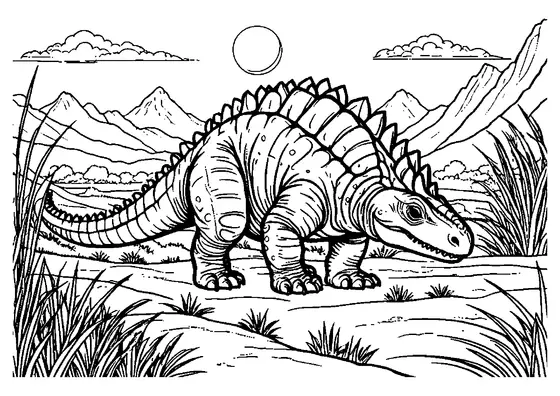
This Ankylosaurus rests its low-built body next to a large stone.

A4 format (landscape), black outlines on a white background · for home and classroom use
All coloring pages: Herbivorous Dinosaur Coloring Pages
Similar coloring pages: Herbivorous Dinosaur Coloring Pages



What else can you print? Free, no account needed
Custom Name Coloring Pages
Enter your child's name to generate a custom coloring page featuring large outline letters to color and decorate.
Open generator →Connect the Dots Generator
Eight connect-the-dots pictures across three difficulty levels. Features faint outline guides for younger children and dots only for older kids.
Open generator →Printables
Worksheets, tracing lines, mazes and dot-to-dots in A4.
Browse printables →
Ankylosaurus Resting Beside a Stone
The low-slung body of the Ankylosaurus is positioned beside a solid stone. Covered in rigid bony plates, this plant-eating dinosaur features a thick, heavy tail ending in a solid bony club. Its sturdy frame sits close to the ground, reflecting the defensive build of late Cretaceous herbivores.
Fascinating Facts About Ankylosaurus
Ankylosaurus lived near rivers and swampy floodplains rich in low-growing vegetation. Its massive tail club was made of fused vertebrae and osteoderms, providing a powerful defense against large predators. Despite its intimidating armor, it moved at a slow walk while grazing on soft leaves and ferns.
Real-World Colors of Ankylosaurus
- Back armor plates: muted brown, olive green, or dark gray
- Underbelly skin: light beige, tan, or pale cream
- Tail club bone: dusty gray or weathered tan
- Ground stone: slate gray or earthy brown