
Amargasaurus with Spines on Its Neck
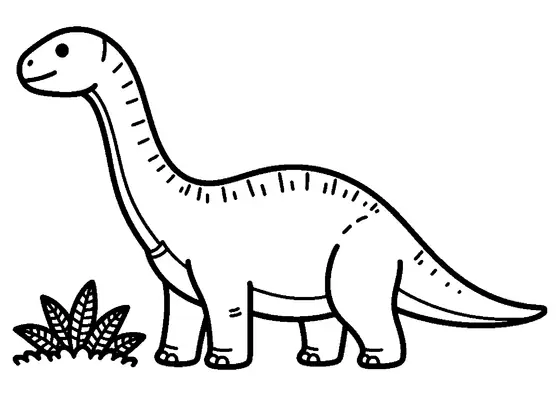
A long-necked Amargasaurus featuring double rows of tall spines along its neck stands quietly near small patches of grass.

A4 format (portrait), black outlines on a white background · for home and classroom use
All coloring pages: Herbivorous Dinosaur Coloring Pages
Similar coloring pages: Herbivorous Dinosaur Coloring Pages


What else can you print? Free, no account needed
Custom Name Coloring Pages
Enter your child's name to generate a custom coloring page featuring large outline letters to color and decorate.
Open generator →Connect the Dots Generator
Eight connect-the-dots pictures across three difficulty levels. Features faint outline guides for younger children and dots only for older kids.
Open generator →Printables
Worksheets, tracing lines, mazes and dot-to-dots in A4.
Browse printables →
Amargasaurus Standing on Four Legs
An Amargasaurus stands on four sturdy legs beside small blades of grass. Two parallel rows of elongated spines extend along the top of its long neck, creating a distinct silhouette above its broad body and tapering tail.
Unique Defensive Spines of South American Sauropods
Unlike most other sauropods, Amargasaurus possessed paired rows of sharp neural spines projecting from its neck vertebrae. Paleontologists believe these horn-like structures helped protect the herbivore from large predators in its Cretaceous habitat.
Natural Colors of Amargasaurus
- Amargasaurus skin: muted olive green or earthy gray-brown
- Neck spines: weathered charcoal or horn-like pale tan
- Underbelly: soft cream or light taupe
- Grass patches: deep green or dry yellowish brown