
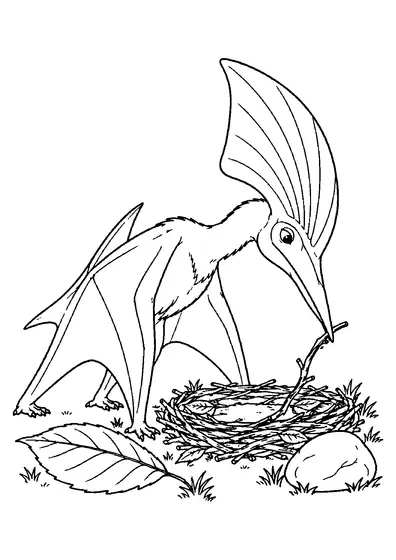
Tapejara Overlooking a Valley from a Rocky Ledge
A distinctively crested Tapejara rests calmly on a high rocky mountain ledge while viewing a panoramic valley stretching below.

A4 format (portrait), black outlines on a white background · for home and classroom use
All coloring pages: Flying and Sea Reptile Coloring Pages
Similar coloring pages: Flying and Sea Reptile Coloring Pages




What else can you print? Free, no account needed
Custom Name Coloring Pages
Enter your child's name to generate a custom coloring page featuring large outline letters to color and decorate.
Open generator →Connect the Dots Generator
Eight connect-the-dots pictures across three difficulty levels. Features faint outline guides for younger children and dots only for older kids.
Open generator →Printables
Worksheets, tracing lines, mazes and dot-to-dots in A4.
Browse printables →
Mountain Vistas and Crested Pterosaurs
The artwork portrays a Tapejara resting atop a mountain rock ledge. High above the landscape, the creature gazes out over a mountain valley background that fills the view behind its elevated perch.
Unique Characteristics of Tapejara
Tapejara is famous for the extraordinary sail-like bone and tissue crest positioned on its head, which dominated its physical profile. Researchers suggest this large crest functioned primarily for species recognition, display, or temperature regulation in warm prehistoric climates. Its short, curved beak was toothless, ideal for plucking ripe fruits or small prey from mountain vegetation.
Natural Colors of Crested Reptiles and Mountain Valleys
- Tapejara skin: warm tan or sandy brown on the torso and wings
- Head crest: vibrant orange, rich terracotta, or bright coral red
- Rocky ledge: dark slate gray, granite charcoal, and weather-worn brown
- Mountain valley: soft sage green, distant lavender hills, and misty blue skies