
Rhamphorhynchus Flying Over the Waves
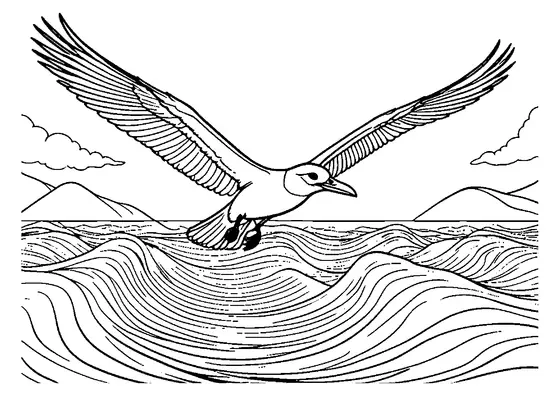
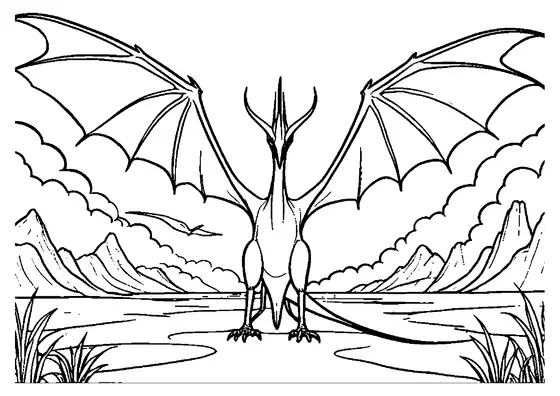
A long-tailed Rhamphorhynchus glides above churning ocean waves on this prehistoric coloring page.

A4 format (landscape), black outlines on a white background · for home and classroom use
All coloring pages: Flying and Sea Reptile Coloring Pages
Similar coloring pages: Flying and Sea Reptile Coloring Pages



What else can you print? Free, no account needed
Custom Name Coloring Pages
Enter your child's name to generate a custom coloring page featuring large outline letters to color and decorate.
Open generator →Connect the Dots Generator
Eight connect-the-dots pictures across three difficulty levels. Features faint outline guides for younger children and dots only for older kids.
Open generator →Printables
Worksheets, tracing lines, mazes and dot-to-dots in A4.
Browse printables →
Rhamphorhynchus Over the Ocean
The flying reptile is shown with broad wings extended, a long tail trailing behind it, and its body held just above rough, foaming waves. A simple horizon marks the meeting point between the sea and the sky.
Life Near Ancient Waters
Rhamphorhynchus was a pterosaur rather than a dinosaur, and its fossils have often been found in rocks formed from ancient marine environments. Its long jaws held slender teeth that could help catch small, slippery prey, while the vane at the end of its tail probably aided stability in flight.
Natural Colors of Rhamphorhynchus and the Sea
- Rhamphorhynchus body: its exact color is unknown, though brown, rust, or gray are plausible natural choices
- Wing membranes: likely muted brown, tan, or gray, based on the skin tones of many living flying animals
- Ocean water: deep blue, blue-green, or slate gray depending on light and conditions
- Wave foam: white, sometimes with a pale blue or gray cast
- Distant sky: pale blue or gray above the horizon