
Anhanguera Gliding Over the Water
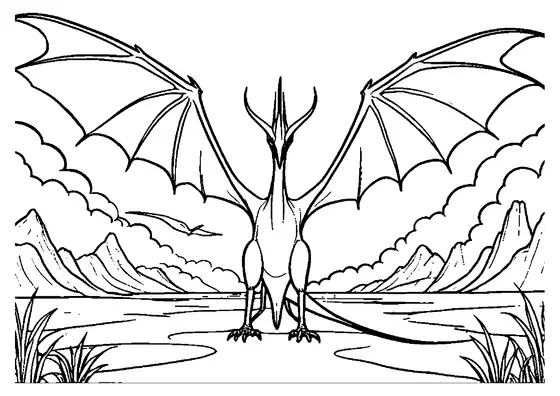
An Anhanguera glides low over choppy ocean waves beneath clouds, with gentle hills lining the horizon.

A4 format (landscape), black outlines on a white background · for home and classroom use
All coloring pages: Flying and Sea Reptile Coloring Pages
Similar coloring pages: Flying and Sea Reptile Coloring Pages



What else can you print? Free, no account needed
Custom Name Coloring Pages
Enter your child's name to generate a custom coloring page featuring large outline letters to color and decorate.
Open generator →Connect the Dots Generator
Eight connect-the-dots pictures across three difficulty levels. Features faint outline guides for younger children and dots only for older kids.
Open generator →Printables
Worksheets, tracing lines, mazes and dot-to-dots in A4.
Browse printables →
Anhanguera Above the Ocean
The flying reptile travels across the horizontal scene with its long wings fully extended just above the rolling water. Waves fill the foreground, while rounded hills and fluffy clouds appear beyond the horizon. Its low path over the sea highlights the connection between this pterosaur and waterside feeding.
A Skilled Hunter Near Water
Anhanguera had a long, narrow jaw armed with pointed teeth that could grip slippery prey such as fish. A crest on the front of its snout may have played a role in display or helped identify members of the same species. Like other pterosaurs, it flew on membranes supported by greatly elongated fingers rather than feathered bird wings.
Colors Seen Around the Sea
- Anhanguera body: the precise color is unknown; gray, brown, tan, or contrasting natural patterns are possible
- Snout crest: unknown, though display structures in living animals are sometimes brighter than the body
- Wing membranes: muted brown, charcoal gray, sandy beige, or mottled shades
- Ocean waves: deep blue, blue-green, turquoise, or slate blue
- Clouds and distant hills: white to soft gray clouds, with green, brown, or hazy blue hills