
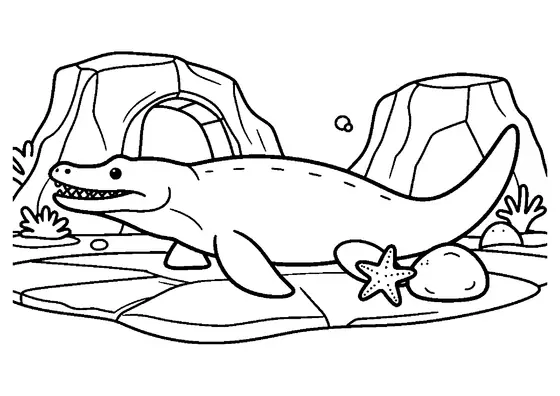
Plesiosaur in a Shallow Sandy Bay
Shallow coastal waters offered prehistoric marine reptiles abundant prey along sunlit sea floors.

A4 format (landscape), black outlines on a white background · for home and classroom use
All coloring pages: Flying and Sea Reptile Coloring Pages
Similar coloring pages: Flying and Sea Reptile Coloring Pages



What else can you print? Free, no account needed
Custom Name Coloring Pages
Enter your child's name to generate a custom coloring page featuring large outline letters to color and decorate.
Open generator →Connect the Dots Generator
Eight connect-the-dots pictures across three difficulty levels. Features faint outline guides for younger children and dots only for older kids.
Open generator →Printables
Worksheets, tracing lines, mazes and dot-to-dots in A4.
Browse printables →
Marine Reptiles in Coastal Waters
Plesiosaurs navigated shallow ocean bays with sandy floors where sea life flourished. Swimming smoothly through clear coastal waters, these creatures used four large flippers to maneuver above underwater sediments and ancient shell-covered animals.
Life along the Sandy Seabed
Plesiosaurs shared shallow bays with shelled creatures known as ammonites, which drifted near the sea floor. Moving through calm coastal bays allowed these marine reptiles to hunt efficiently without fighting strong open-ocean currents. The sandy substrate often hid small sea creatures that plesiosaurs could easily capture using their long necks.
Natural Colors of a Marine Environment
- Plesiosaur body: dark slate gray, olive green, or navy blue
- Underside of the reptile: pale cream or light gray
- Sandy seabed: warm tan or yellowish-beige
- Ammonite shells: brownish-gray, cream, or mottled rust
- Shallow bay water: clear turquoise or light aquamarine