
Elasmosaurus Watching Swimming Ammonites
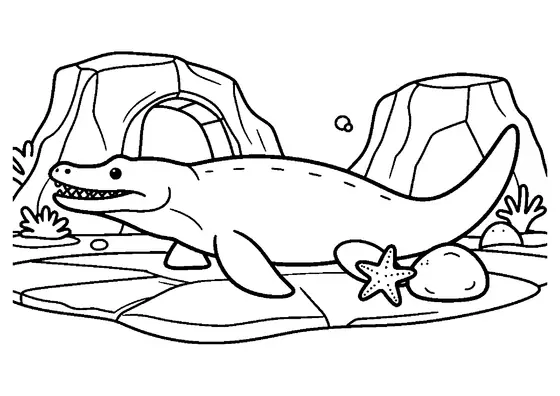
An exceptionally long-necked Elasmosaurus glides underwater past floating ammonites and rocky sea flora.

A4 format (landscape), black outlines on a white background · for home and classroom use
All coloring pages: Flying and Sea Reptile Coloring Pages
Similar coloring pages: Flying and Sea Reptile Coloring Pages


What else can you print? Free, no account needed
Custom Name Coloring Pages
Enter your child's name to generate a custom coloring page featuring large outline letters to color and decorate.
Open generator →Connect the Dots Generator
Eight connect-the-dots pictures across three difficulty levels. Features faint outline guides for younger children and dots only for older kids.
Open generator →Printables
Worksheets, tracing lines, mazes and dot-to-dots in A4.
Browse printables →
Elasmosaurus Gliding Past Sea Life
An Elasmosaurus with a remarkably long neck glides through the ocean depths. Floating ammonites drift nearby while underwater rocks and seaweed rest along the sea floor. The graceful marine reptile steers smoothly past subsea formations as sea creatures move through the surrounding water.
Ocean Environments of the Late Cretaceous
During the Late Cretaceous period, vast shallow seas covered large areas of the continents, creating rich marine ecosystems. Ammonites with coiled spiral shells floated in vast schools through these sunlit ocean waters. The long neck of Elasmosaurus allowed it to approach schools of ammonites and small fish without casting a large shadow overhead.
Real World Colors of Deep Sea Reptiles and Shells
- Elasmosaurus skin: Dark slate gray or navy blue on the dorsal back with pale grayish-white underbelly
- Ammonite shells: Muted tan, cream, brown, or striped reddish-brown patterns
- Seaweed and algae: Deep forest green, olive green, or dark reddish-brown
- Seafloor rocks: Dark gray, brownish-black, and sediment-covered tan stone