
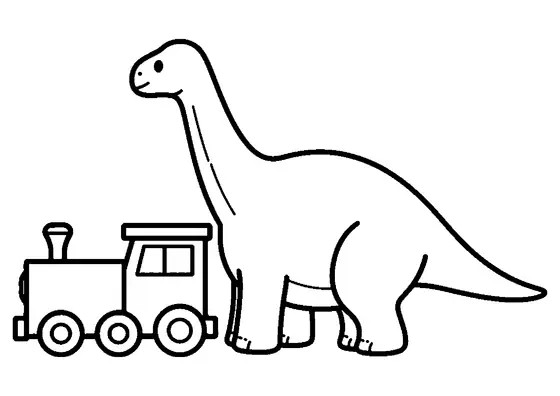
Camarasaurus in a Switcher Locomotive
A long-necked Camarasaurus manages a compact rail yard switcher locomotive.

A4 format (landscape), black outlines on a white background · for home and classroom use
All coloring pages: Dinosaur Coloring Pages
Similar coloring pages: Dinosaur Coloring Pages


What else can you print? Free, no account needed
Custom Name Coloring Pages
Enter your child's name to generate a custom coloring page featuring large outline letters to color and decorate.
Open generator →Connect the Dots Generator
Eight connect-the-dots pictures across three difficulty levels. Features faint outline guides for younger children and dots only for older kids.
Open generator →Printables
Worksheets, tracing lines, mazes and dot-to-dots in A4.
Browse printables →
Camarasaurus Driving a Switcher Locomotive
A Camarasaurus with its characteristic long neck operates a compact switcher locomotive. The short frame of the engine combined with the towering posture of the sauropod brings together industrial railway work and ancient herbivorous wildlife.
Switcher Locomotives and Sauropod Features
Switcher locomotives are specialized train engines built to assemble, sort, and move railroad cars around freight yards rather than pulling long distance trains. Camarasaurus lived in North America during the Late Jurassic period and was one of the most common sauropods of its era. Its name means chambered lizard, referring to the hollow spaces in its vertebrae that reduced the weight of its massive skeleton.
Realistic Colors of Camarasaurus and Railway Engines
- Camarasaurus skin: earth tones such as brown, gray, or dark green
- Dinosaur neck underside: light yellow-green or pale tan
- Switcher locomotive body: industrial yellow, deep orange, or dark green
- Engine wheels and undercarriage: steel gray or matte black