
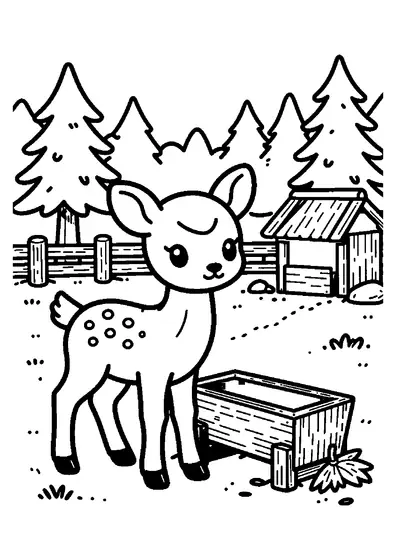
Fawn by a Woodland Spring
A young deer pauses near a freshwater spring tucked within a peaceful forest setting.

A4 format (portrait), black outlines on a white background · for home and classroom use
All coloring pages: Coloring Pages for Girls
Similar coloring pages: Coloring Pages for Girls


What else can you print? Free, no account needed
Custom Name Coloring Pages
Enter your child's name to generate a custom coloring page featuring large outline letters to color and decorate.
Open generator →Connect the Dots Generator
Eight connect-the-dots pictures across three difficulty levels. Features faint outline guides for younger children and dots only for older kids.
Open generator →Printables
Worksheets, tracing lines, mazes and dot-to-dots in A4.
Browse printables →
A Young Deer in the Forest
Freshwater springs in woodland environments supply clean drinking water for forest animals while nourishing nearby vegetation. Rocks and broad foliage naturally form around these shaded water sources.
How Fawns Adapt to Their Environment
Newborn fawns are born with white spots along their backs that mimic the dappled sunlight filtering through tree leaves. This natural pattern helps conceal them from predators while they rest quietly in tall grass. Mother deer often leave their fawns hidden in safe spots while searching for food nearby.
Real Colors of Forest Deer and Plants
- Fawn coat: reddish-brown with white spots along the back
- Fawn nose and hooves: dark brown or black
- Forest rocks: granite gray, mossy green, or dark brown
- Woodland leaves: vibrant green or olive
- Spring water: clear blue or reflective light teal