
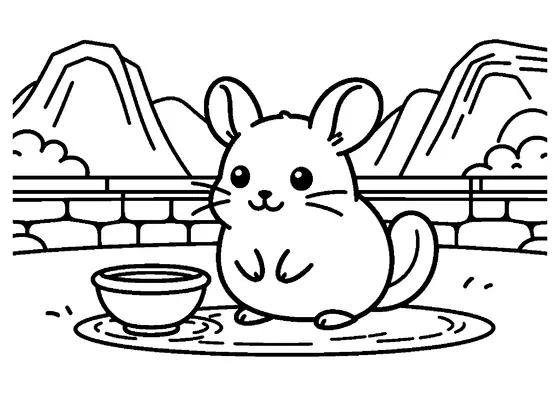
Capybara by a Warm Lagoon
A capybara spends a quiet moment beside a wooden bucket and a naturally warm lagoon surrounded by rocks and gentle water ripples.

A4 format (landscape), black outlines on a white background · for home and classroom use
All coloring pages: Coloring Pages for Girls
Similar coloring pages: Coloring Pages for Girls




What else can you print? Free, no account needed
Custom Name Coloring Pages
Enter your child's name to generate a custom coloring page featuring large outline letters to color and decorate.
Open generator →Connect the Dots Generator
Eight connect-the-dots pictures across three difficulty levels. Features faint outline guides for younger children and dots only for older kids.
Open generator →Printables
Worksheets, tracing lines, mazes and dot-to-dots in A4.
Browse printables →
Capybara Resting by a Peaceful Thermal Lagoon
A capybara sits in a serene outdoor environment right next to a wooden bucket. Thermal lagoons and calm waters often feature smooth rocks along the shore and gentle water ripples created by subtle currents. This setting offers a quiet look at a semi-aquatic habitat where capybaras frequently gather to relax and stay comfortable near water sources.
Fascinating Facts About Thermal Habitats and Capybaras
Naturally warm lagoons often gain their thermal heat from underground volcanic activity or geothermal springs. Capybaras are native to South America and are exceptional swimmers, using webbed feet to navigate rivers, marshes, and warm pools with ease. Their dense fur dries quickly when they step out onto rocky shorelines.
Real Colors of the Capybara and Its Surroundings
- Capybara fur: dark brown to reddish-brown tones
- Capybara eyes and nose: deep black or dark brown
- Wooden bucket: warm reddish-brown timber with dull gray metallic bands
- Lagoon rocks: natural shades of slate gray, tan, and dark charcoal
- Lagoon water: soft blue, aqua, or murky green depending on mineral content