
Easter Egg Wrapped in Jasmine Lace
A tall Easter egg with leaf and swirl engravings sits on a carved base, framed by climbing jasmine shoots with broad petals.

A4 format (portrait), black outlines on a white background · for home and classroom use
All coloring pages: Pattern and Ornament Coloring Pages
Similar coloring pages: Pattern and Ornament Coloring Pages
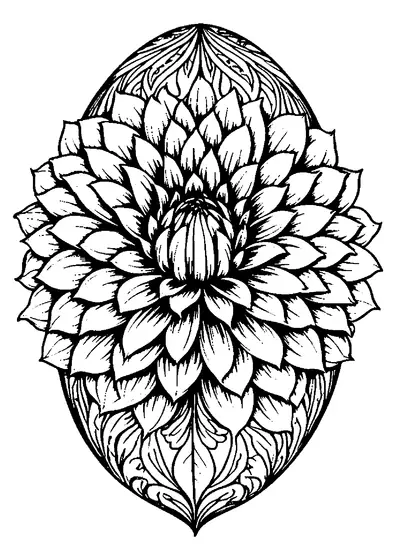


Jasmine Vines Surrounding an Engraved Easter Egg
A stately Easter egg stands proudly on a carved support at the middle of the design, embellished with scrollwork and leafy filigree. Climbing jasmine shoots run alongside the egg on both sides, displaying wide petals, swelling buds, and thick leaf clusters.
The History and Fragrance of Jasmine
Jasmine belongs to the olive family and is renowned worldwide for its intensely sweet fragrance, which becomes strongest after sunset. In many Mediterranean and Asian cultures, jasmine blossoms are woven into crowns and garlands for celebrations to symbolize purity and new beginnings.
Colors of Real Jasmine and Wooden Supports
- Jasmine petals: starry porcelain white, creamy ivory, or light yellow
- Jasmine flower buds: soft pink or reddish-purple before fully opening
- Jasmine vines and leaves: rich emerald green to deep olive green
- Carved pedestal base: dark walnut, smooth brass, or carved birch wood