
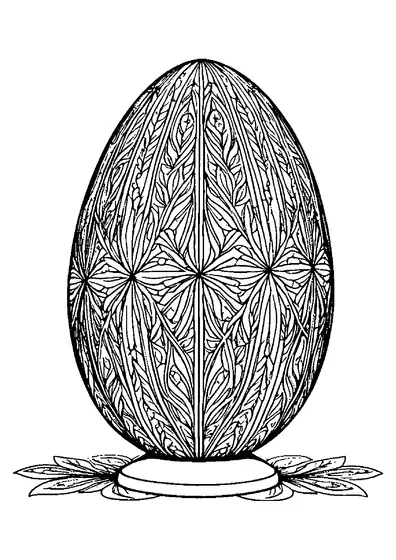
Easter Egg with a Freesia Cascade
A large Easter egg rests on a molded stand while blooming freesia stems border its sides in a vertical design.

Print Download PNG
A4 format (portrait), black outlines on a white background · for home and classroom use
Advertisement
All coloring pages: Pattern and Ornament Coloring Pages
More from this category
Similar coloring pages: Pattern and Ornament Coloring Pages



Decorated Easter Egg Resting on a Stand
A large Easter egg stands upright on a shaped pedestal in a vertical layout. Branches of flowering freesias flank the egg on both sides against a plain background.
Unique Characteristics of Freesia Blossoms
Freesias are native to southern Africa and are renowned for their delicate funnel-shaped blooms and sweet fragrance. Their flowers open along one side of a curved stem, creating a striking ladder-like arrangement. In floral design, these spring blossoms represent trust, thoughtfulness, and renewal.
Natural Shades of Freesias and Display Stands
- Freesia petals: Bright yellow, pure white, lavender, pink, or deep crimson
- Freesia stems and buds: Slender bright green stalks with pale green unopened buds
- Wooden egg stand: Warm walnut brown, smooth mahogany, or natural oak
- Eggshell surface: Creamy ivory, pale brown, or pastel shades from plant dyes
Questions and answers
Questions and Answers About Freesias and Easter Displays
Why do freesia stems bend naturally as they grow?
Freesia stems grow in a horizontal bend near the top so that the blooms face upward toward pollinators. This unique angle allows bees and butterflies to land easily on the open petals.
What materials are traditional egg stands crafted from?
Carved wood, polished brass, and glazed ceramic are traditional materials used to display decorative eggs safely without rolling.
How long do fresh freesias last in a vase?
Cut freesias can remain fresh for up to two weeks if kept in cool water and away from direct sunlight. The lower buds open first, followed sequentially by the blossoms further up the stem.