
Easter Egg with Alder Catkins
A decorated Easter egg framed by oval rings sits amidst leafy alder branches on all sides of the composition.

A4 format (landscape), black outlines on a white background · for home and classroom use
All coloring pages: Pattern and Ornament Coloring Pages
Similar coloring pages: Pattern and Ornament Coloring Pages

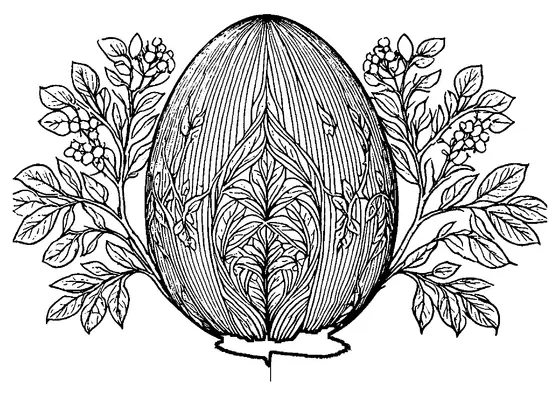
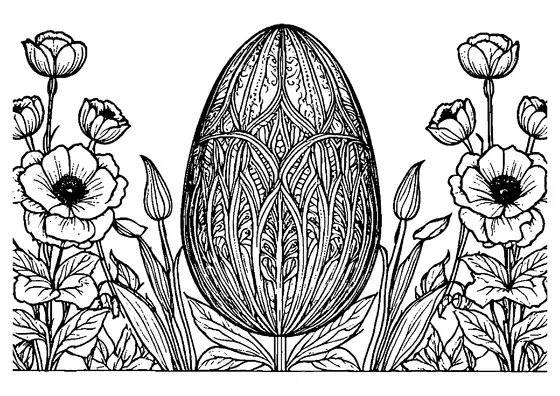
Easter Egg Framed by Alder Branches
The centerpiece features a large Easter egg ornamented with leaf and stem motifs, enclosed by concentric oval rings. Leafy alder branches fill the outer arrangement, extending along the sides as well as the upper and lower borders.
Remarkable Facts About Alder Trees
Alder trees commonly grow along riverbanks and wetland areas, helping stabilize muddy soil with their deep root systems. Their wood exhibits a unique natural property, changing from pale cream to a warm reddish orange shortly after being cut. Furthermore, alder trees form a symbiotic relationship with nitrogen-fixing bacteria, enriching surrounding soil for neighboring plants.
Natural Colors of Alder Trees and Spring Foliage
- Alder leaves: deep green on top with pale grayish green undersides
- Alder bark: smooth dark gray or brownish gray
- Alder catkins: yellowish brown or reddish purple before opening
- Concentric rings and egg shell: natural eggshell white, soft terracotta, or pale sky blue