
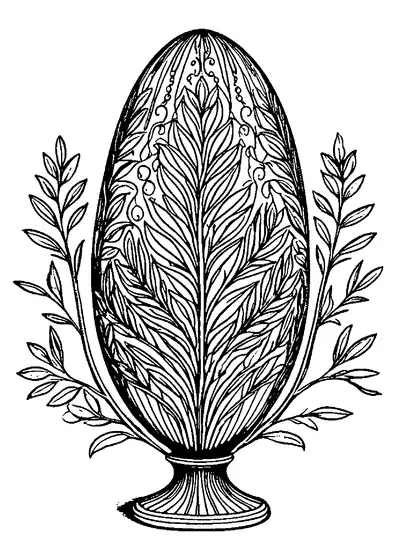
Easter Egg with a Lavender Pattern
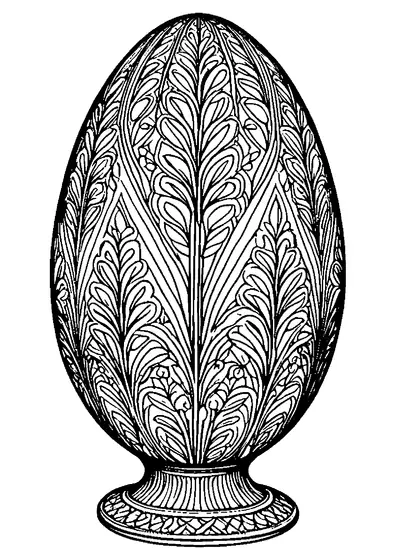
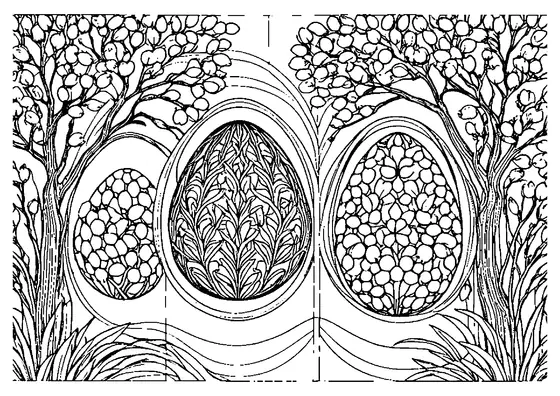
A patterned Easter egg sits on an elegant pedestal framed by two upright lavender stalks.

A4 format (portrait), black outlines on a white background · for home and classroom use
All coloring pages: Pattern and Ornament Coloring Pages
Similar coloring pages: Pattern and Ornament Coloring Pages

Horizontal Lace Bands and Lavender Stalks
Set in a vertical layout, an ornate Easter egg stands on a decorative pedestal. Horizontal bands across the egg display lace patterns, openwork netting, and botanical motifs, framed symmetrically by lavender stalks rising on each side.
Fragrant Lavender Flowers in Sunlit Gardens
Lavender is a drought-tolerant Mediterranean shrub famous for its aromatic purple flowers and narrow gray-green leaves. Essential oils stored in tiny glands across the leaves and blossoms release a soothing fragrance when touched. Honeybees and butterflies frequently visit lavender fields throughout the warm summer months to collect rich nectar.
Natural Palette of Lavender Plants
- Lavender blossoms: Violet, purple, or deep lilac
- Lavender stems and foliage: Silver-gray or muted sage green
- Dried lavender buds: Pale mauve or dusty blue
- Clay plant pots: Terracotta orange or warm tan