
Easter Egg Among Sage Flower Spikes
A large upright Easter egg with floral ornamentation stands embedded among slender leaves and tall sage flower spikes.

A4 format (landscape), black outlines on a white background · for home and classroom use
All coloring pages: Pattern and Ornament Coloring Pages
Similar coloring pages: Pattern and Ornament Coloring Pages
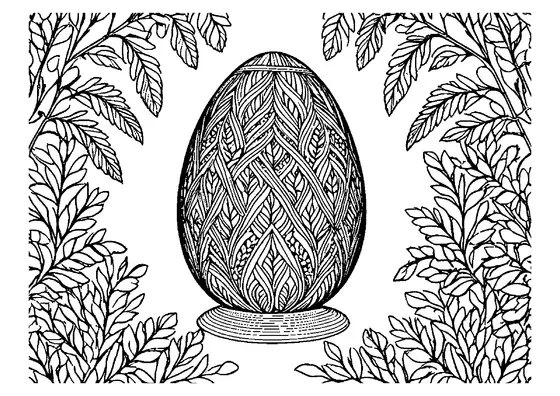


Ornamental Easter Egg Standing in a Sage Patch
Positioned centrally, a large vertical Easter egg is covered in detailed plant motifs separated by a central decorative band. The lower half displays a cluster of sharp, slender leaves and flowering sage spikes surrounding the base of the egg ornament.
Characteristics of Garden Sage Plants
Sage is a perennial aromatic herb belonging to the mint family, recognized for textured leaves and upright flowering stalks. The tubular blossoms grow along tall spikes, producing rich nectar that attracts pollinators like bumblebees and hummingbirds. Sage foliage produces aromatic essential oils that give the plant its characteristic fragrance and culinary value.
Colors of Sage and Botanical Egg Designs
- Sage Flower Spikes: Soft lavender, deep purple, or violet-blue
- Sage Leaves: Silvery green or dusty grayish-green
- Sage Stems: Pale green with light woody tones near the ground
- Patterned Egg Shell: Indigo blue, saffron yellow, crimson, or porcelain white