
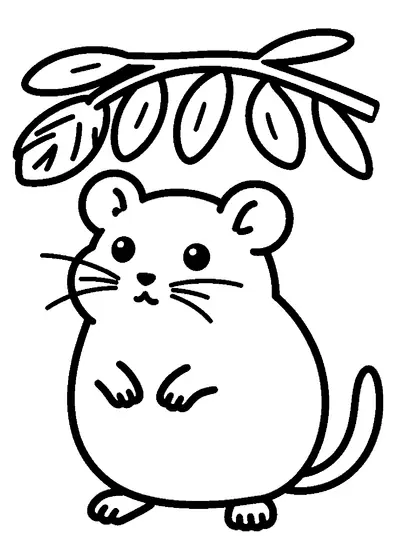
Wood Mouse with an Acorn
A woodland scene highlights a wood mouse beside an acorn in a peaceful forest setting.

A4 format (landscape), black outlines on a white background · for home and classroom use
All coloring pages: Woodland Animal Coloring Pages
Similar coloring pages: Woodland Animal Coloring Pages




What else can you print? Free, no account needed
Custom Name Coloring Pages
Enter your child's name to generate a custom coloring page featuring large outline letters to color and decorate.
Open generator →Connect the Dots Generator
Eight connect-the-dots pictures across three difficulty levels. Features faint outline guides for younger children and dots only for older kids.
Open generator →Printables
Worksheets, tracing lines, mazes and dot-to-dots in A4.
Browse printables →
The Wood Mouse and Forest Seeds
This depiction highlights the wood mouse, a common wild rodent distinguished by its oversized ears, prominent facial whiskers, and long slender tail. The scene includes an acorn positioned near the animal.
How Wood Mice Help Oak Forests
Wood mice gather acorns, hazel nuts, and tree seeds throughout autumn to store in underground food caches. Because they bury thousands of acorns every season and occasionally forget some, wood mice act as natural tree planters that help regenerate oak forests. Their extraordinary jumping ability and keen senses allow them to forage safely during nighttime hours.
Natural Colors of the Wood Mouse
- Upper coat: warm chestnut brown
- Belly fur: pale grayish white
- Prominent ears: soft pinkish brown
- Long thin tail: pale dusty gray
- Acorn cap and shell: dark oak brown