
Wasp on a Broad Leaf
A side-view illustration features a wasp resting on a wide leaf, highlighting its distinctive narrow waist and slender antennae.

A4 format (portrait), black outlines on a white background · for home and classroom use
All coloring pages: Woodland Animal Coloring Pages
Similar coloring pages: Woodland Animal Coloring Pages


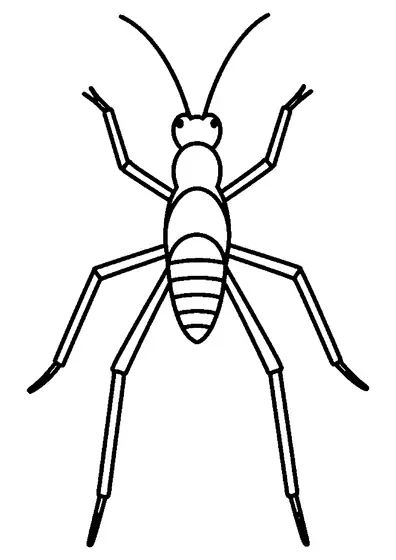

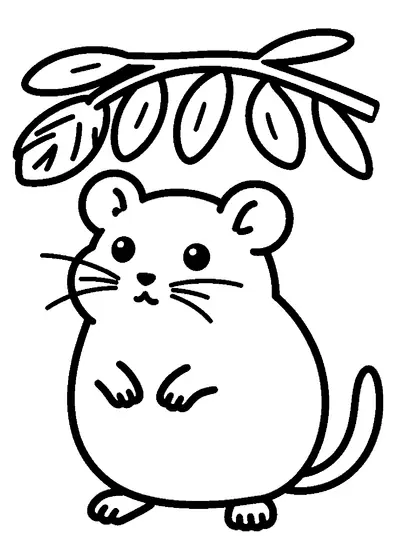
What else can you print? Free, no account needed
Custom Name Coloring Pages
Enter your child's name to generate a custom coloring page featuring large outline letters to color and decorate.
Open generator →Connect the Dots Generator
Eight connect-the-dots pictures across three difficulty levels. Features faint outline guides for younger children and dots only for older kids.
Open generator →Printables
Worksheets, tracing lines, mazes and dot-to-dots in A4.
Browse printables →
Wasp Resting on a Leaf
The insect rests calmly on the flat surface of a large leaf, displaying its characteristic bodily sections. Its long legs extend downward while its narrow waist connects the dark thorax to the yellow and black striped abdomen. Translucent wings lie folded along the back, and two slender antennae curve outward from the head.
Interesting Facts About Wasps and Foliage
Many social wasps build paper nests beneath foliage, using masticated wood fiber mixed with saliva to construct intricate comb structures. Leaves provide natural shelter from sudden weather changes while serving as convenient landing platforms during foraging flights. Although often confused with bees, wasps possess smoother bodies and act as important natural pest controls in gardens by hunting plant-eating insects.
Real Colors of the Wasp and Leaf
- Wasp abdomen: bright yellow with distinct black stripes
- Thorax and head: dark brown or black
- Wings: translucent pale gray with fine dark veins
- Antennae and legs: reddish brown or dark brown
- Broad leaf: rich green with lighter green veins