
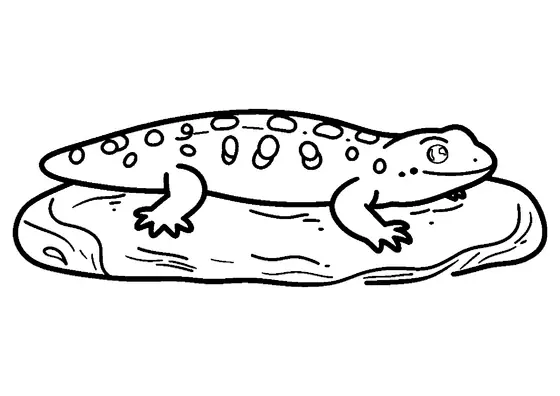
Sand Lizard on a Rock
An outdoor wildlife page featuring a scaly sand lizard perched on a wide rock.

A4 format (landscape), black outlines on a white background · for home and classroom use
All coloring pages: Woodland Animal Coloring Pages
Similar coloring pages: Woodland Animal Coloring Pages




What else can you print? Free, no account needed
Custom Name Coloring Pages
Enter your child's name to generate a custom coloring page featuring large outline letters to color and decorate.
Open generator →Connect the Dots Generator
Eight connect-the-dots pictures across three difficulty levels. Features faint outline guides for younger children and dots only for older kids.
Open generator →Printables
Worksheets, tracing lines, mazes and dot-to-dots in A4.
Browse printables →
Sand Lizard Resting on a Rock
This image displays a sand lizard positioned on top of a stone surface. The reptile features a scaly body structure, sharp clawed toes built for climbing, and a long tail that aids in balancing as it navigates dry, rocky terrain.
Fascinating Characteristics of Sand Lizards
Sand lizards thrive in open, sunlit areas such as heathlands and rocky clearings where exposed stones heat up quickly in the sun. Basking on sun-warmed rocks helps these cold-blooded reptiles raise their body temperature so they can hunt efficiently. When startled by predators, they can detach their long tail, which wiggles to distract attackers while the lizard escapes.
Real Colors of the Sand Lizard
- Lizard back: Sandy brown with dark spots and pale stripes
- Male lizard flanks: Vivid green during the spring mating season
- Lizard belly: Off-white or cream with tiny dark flecks
- Rock surface: Light gray, tan, or charcoal stone