
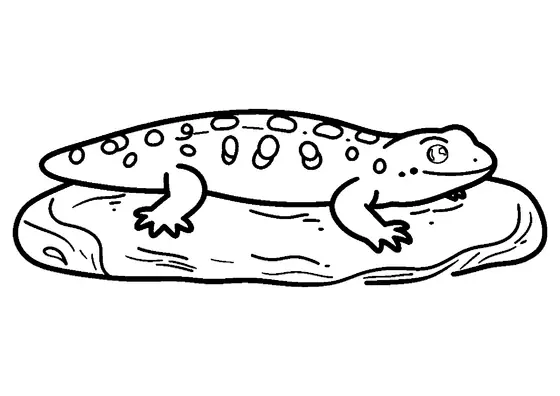
Grass Frog by a Rock
An amphibian with dark eye markings sits calmly beside a smooth stone near woodland vegetation.

A4 format (landscape), black outlines on a white background · for home and classroom use
All coloring pages: Woodland Animal Coloring Pages
Similar coloring pages: Woodland Animal Coloring Pages




What else can you print? Free, no account needed
Custom Name Coloring Pages
Enter your child's name to generate a custom coloring page featuring large outline letters to color and decorate.
Open generator →Connect the Dots Generator
Eight connect-the-dots pictures across three difficulty levels. Features faint outline guides for younger children and dots only for older kids.
Open generator →Printables
Worksheets, tracing lines, mazes and dot-to-dots in A4.
Browse printables →
Grass Frog Resting Near a Smooth Stone
This depiction shows a front view of a grass frog positioned right beside a smooth round rock. The animal exhibits long hind legs designed for jumping and distinct dark patches near its eyes, reflecting the classic features of meadow amphibians.
Damp Environments and Rock Shelters
Grass frogs often seek refuge beside stones and logs because rocks retain coolness and moisture during hot daylight hours. Moist environments are essential for these amphibians since they absorb a significant portion of their oxygen directly through their skin. Being near rocks also provides immediate cover from passing predators.
Natural Palette of a Grass Frog
- Upper skin: Olive green, brown, or tan with dark spots
- Eye patches: Dark brown or black
- Underbelly: Off-white or pale yellowish-gray
- Smooth rock: Medium gray, granite brown, or slate