
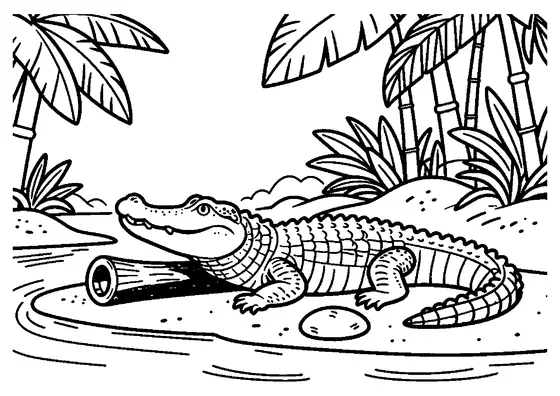
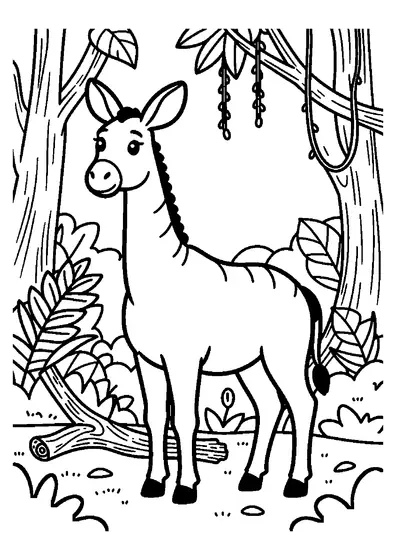
Tasmanian Devil Beside a Hollow Log
A carnivorous marsupial explores stony terrain adjacent to a fallen hollow tree trunk.

A4 format (portrait), black outlines on a white background · for home and classroom use
All coloring pages: Wild Animal Coloring Pages
Similar coloring pages: Wild Animal Coloring Pages



What else can you print? Free, no account needed
Custom Name Coloring Pages
Enter your child's name to generate a custom coloring page featuring large outline letters to color and decorate.
Open generator →Connect the Dots Generator
Eight connect-the-dots pictures across three difficulty levels. Features faint outline guides for younger children and dots only for older kids.
Open generator →Printables
Worksheets, tracing lines, mazes and dot-to-dots in A4.
Browse printables →
Tasmanian Devil in Its Native Habitat
This scene shows a sturdy Tasmanian devil positioned on uneven rocky ground next to a hollow log. The natural environment features weathered stone surfaces and decayed timber common to the wilderness of Tasmania.
Wildlife Uses of Fallen Hollow Trees
Hollow logs serve as essential den sites and hiding spots for native Australian predators. Termites and moisture gradually decompose the interior of fallen trunks, creating hollow chambers used by small mammals for shelter. Tasmanian devils often search around decaying wood for scents left by other animals.
Natural Shades of the Tasmanian Wilderness
- Tasmanian devil fur: coarse black with white chest or rump markings
- Nose and inner ears: soft pinkish red
- Hollow log: dark brown bark with grayish decayed interior wood
- Rocky ground: granite gray, slate, and reddish-brown gravel