
Capybara by a Sunny Tropical River Bend
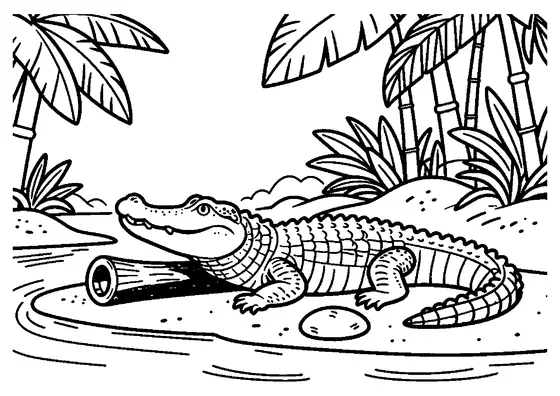
A capybara stands on a sunny tropical riverbank surrounded by green palm fronds and smooth river rocks.

A4 format (landscape), black outlines on a white background · for home and classroom use
All coloring pages: Wild Animal Coloring Pages
Similar coloring pages: Wild Animal Coloring Pages



What else can you print? Free, no account needed
Custom Name Coloring Pages
Enter your child's name to generate a custom coloring page featuring large outline letters to color and decorate.
Open generator →Connect the Dots Generator
Eight connect-the-dots pictures across three difficulty levels. Features faint outline guides for younger children and dots only for older kids.
Open generator →Printables
Worksheets, tracing lines, mazes and dot-to-dots in A4.
Browse printables →
Capybara Resting Along a Tropical Riverbank
Near a gentle bend in a tropical river, a capybara pauses on the muddy shore. Broad palm leaves shade the riverbank, where smooth stones line the edge of the quiet tropical water.
Semi-Aquatic Habits of Capybaras
Capybaras are the largest living rodents in the world, native to lush wetlands and river basins across South America. They are exceptional swimmers with webbed feet and can stay submerged underwater for up to five minutes to escape predators or cool off during warm tropical afternoons.
Natural Colors of Capybaras and Tropical Riverbanks
- Capybara fur: Reddish-brown, dark brown, or yellowish-brown coarse coat
- Tropical palm leaves: Deep emerald green, vibrant jungle green, or bright lime
- River rocks: Smooth gray, tan, dark slate, or wet brown pebbles
- Tropical river water: Murky green, warm brown, or reflective sky blue