
Saiga Antelope on the Mongolian Steppe
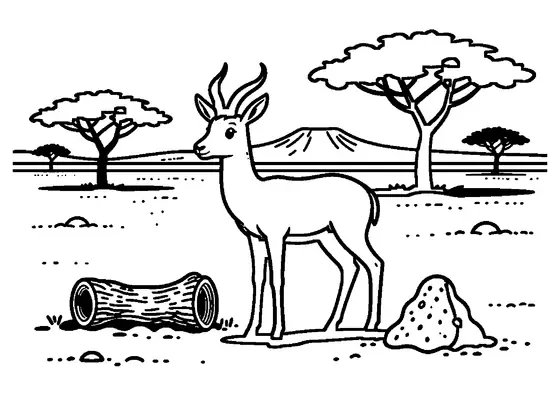
Vast open grasslands across the Mongolian steppe host the saiga antelope, famous for its unusual flexible nose.

A4 format (landscape), black outlines on a white background · for home and classroom use
All coloring pages: Wild Animal Coloring Pages
Similar coloring pages: Wild Animal Coloring Pages


What else can you print? Free, no account needed
Custom Name Coloring Pages
Enter your child's name to generate a custom coloring page featuring large outline letters to color and decorate.
Open generator →Connect the Dots Generator
Eight connect-the-dots pictures across three difficulty levels. Features faint outline guides for younger children and dots only for older kids.
Open generator →Printables
Worksheets, tracing lines, mazes and dot-to-dots in A4.
Browse printables →
The Saiga Antelope of the Grassland Steppe
Extensive steppe plains in Mongolia provide vast open grazing grounds for the saiga antelope. This remarkable animal wanders across flat grassland horizons, using its specialized snout to filter dust and warm cold mountain air while grazing on native grasses.
Adaptation of the Saiga Nose
The oversized, inflatable nose of the saiga antelope is one of the most specialized evolutionary traits among grass-eating mammals. During dry summer migrations across dusty steppes, the nasal structure filters out kicked-up dirt, while in freeze-prone winters it warms freezing air before it reaches the lungs.
Natural Colors of the Saiga and the Steppe
- Saiga summer coat: yellowish cinnamon brown
- Saiga winter coat: pale grayish white
- Translucent horns: amber or light honey yellow
- Steppe grass: golden tan, pale straw, and dry green